

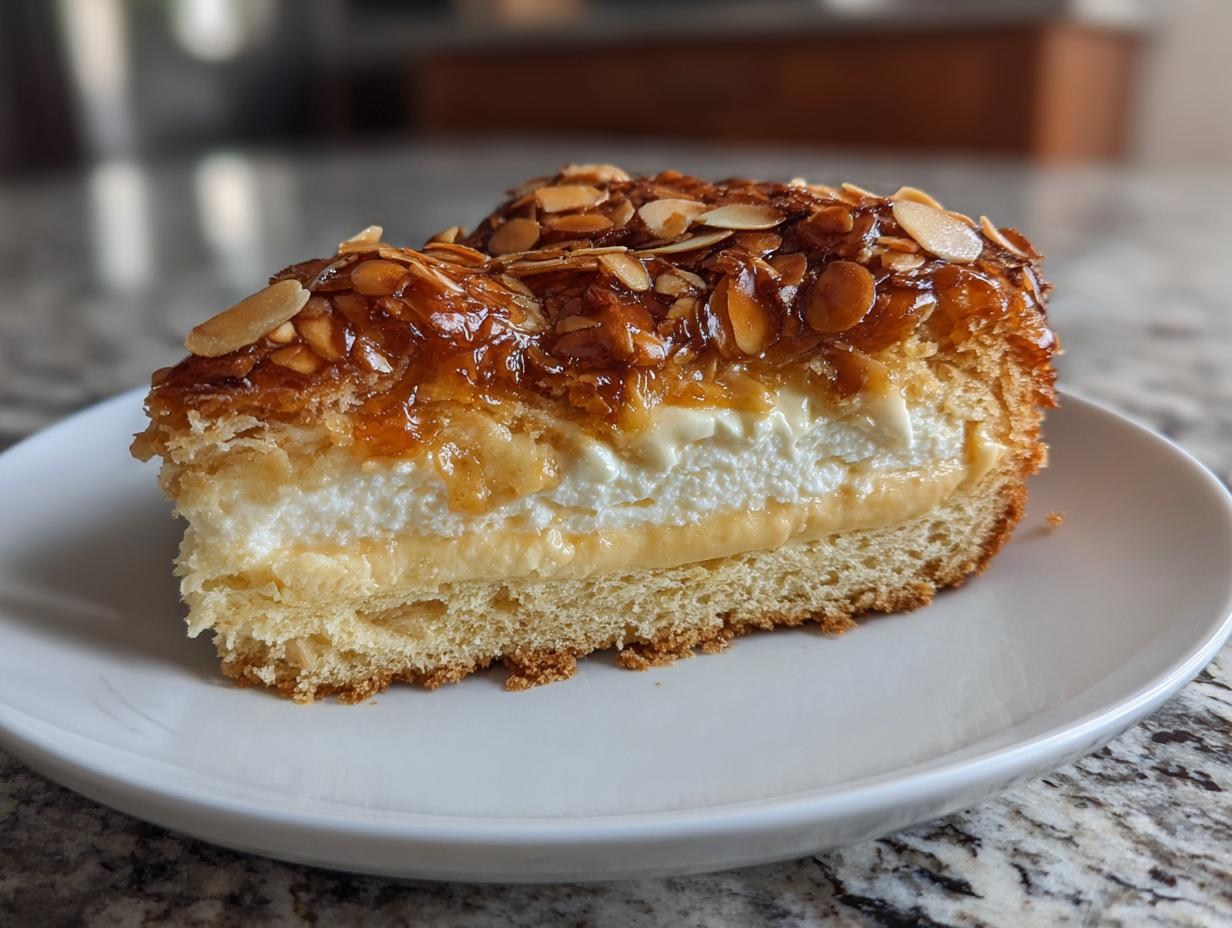
There’s something so deeply satisfying about mastering a classic European bake, isn’t there? We’re diving headfirst into a showstopper today: the Authentic German Bee Sting Cake, or Bienenstich. Forget everything you think you know about cakes that sting—this one is pure delight! I promise you, this classic dessert is worth every second. The magic of this famous Bee Sting Cake comes down to balancing three completely different textures: a soft, airy yeast dough base, a lush, cool creamy custard filling, and that famous crown of bubbly, caramelized honey-almond topping. It sounds complicated, I know, but trust me. Here at Bliss Batter, founder Claire Sterling’s commitment to testing and perfecting every recipe means you can confidently create bakery-style perfection right in your own kitchen. You can read more about our baking philosophy over on our About Page. Get ready for a truly showstopping dessert!
- Why This Bee Sting Cake is a Traditional German Dessert Must-Make
- Essential Ingredients for Your Bee Sting Cake
- Step-by-Step Instructions: How to Make Bee Sting Cake
- Assembling Your Layered Custard Cake: The Final Bee Sting Cake Steps
- Tips for Success Making Authentic German Bee Sting Cake
- Ingredient Notes and Substitutions for Bee Sting Cake
- Storage and Reheating Instructions for Leftover Bee Sting Cake
- Frequently Asked Questions About the Bee Sting Cake
- Share Your German Bee Sting Cake Creations
- Share Your German Bee Sting Cake Creations
Why This Bee Sting Cake is a Traditional German Dessert Must-Make
Honestly, if you’re looking for a dessert that really pulls out all the stops, stop looking right now. This Bee Sting Cake isn’t just any cake; it’s a treasured piece of German baking culture. My extensive testing process means we’re bypassing the guesswork so you can focus on the delicious result. This recipe delivers that perfect, authentic experience that elevates your coffee time into something truly special.
Why should this Bienenstich jump to the top of your baking list? Let me tell you why:
- It’s the ultimate Traditional German dessert experience. It just tastes like that old-world charm you can’t get anywhere else.
- You get three textures in every single bite! That crunch from the topping, the softness of the dough, and the cooling smoothness of the cream—it’s heaven, I tell you!
- It’s a true centerpiece. Forget simple sheet cakes; this layered beauty proves you can create Bakery style German cake results without leaving your kitchen.
- It’s perfect for when you want something elegant but satisfying for your afternoon snack. It’s the star of any coffee break!
- We’ve made the process straightforward. If you follow my specific timing and mixing notes, you’ll find this becomes an Easy Bienenstich guide for you to rely on again and again.
Achieving Bakery Style German Cake Results at Home
You might look at other recipes and think, “Nope, too fussy.” I get it! When I first started testing this, my crust kept burning and the filling was always too runny. But that’s why I worked so hard on these instructions. We break down that yeast dough activation, the precise temperature for simmering the topping, and, most importantly, how to make sure that creamy vanilla custard sets up perfectly.
We focus on clarity, not complexity. This isn’t about fancy gadgets; it’s about knowing the *why* behind the *how*. You’ll feel like you’ve unlocked a secret when you slice into that perfectly layered cake. If you enjoy baking cakes that have a real structure and depth of flavor, make sure you check out my notes on moist coffee cakes too—it’s all about treating the batter right!
Essential Ingredients for Your Bee Sting Cake
Okay, let’s talk about what goes *into* this showstopper! Making a truly authentic Bee Sting Cake means respecting the three distinct layers. Each part needs different ingredients handled in a specific way, and trust me, quality matters when you’re recreating a traditional German classic. I made sure that every single ingredient listed in the full recipe calls for specific preparation—like butter that is perfectly softened or yeast that is still lively and foamy. You have to treat these components individually before they come together!
We are dividing our beautiful Bienenstich into three core building blocks. Pay close attention here because getting the right texture in each section is the whole trick to avoiding a soggy bottom or a flat top!
For the Fluffy Yeast Dough Base
This is what gives us that wonderful lightness that coffee shop cakes just can’t match. We need whole milk, remember to warm it gently—not hot! Active dry yeast, of course, because we want that beautiful rise that defines Fluffy yeast dough baking. Then we have our flour, salt, one beautiful large egg, and, importantly, that 1/4 cup of softened unsalted butter. Softened, not melted! That butter has to cream properly with the sugar later, so please don’t pull it out last minute.
For the Caramelized Honey-Almond Topping
This is the “sting” part, the absolute best crunch moment! Here we need granulated sugar, but the star is the honey. Don’t skimp on the honey here; you really need the real stuff to get that deep, golden flavor for your Caramelized almond topping. We mix that with heavy cream and two tablespoons of good butter, and toss in the sliced almonds. This needs to simmer just right so the sugar melts without burning to a hard crack. It’s a delicate balance, but so rewarding!
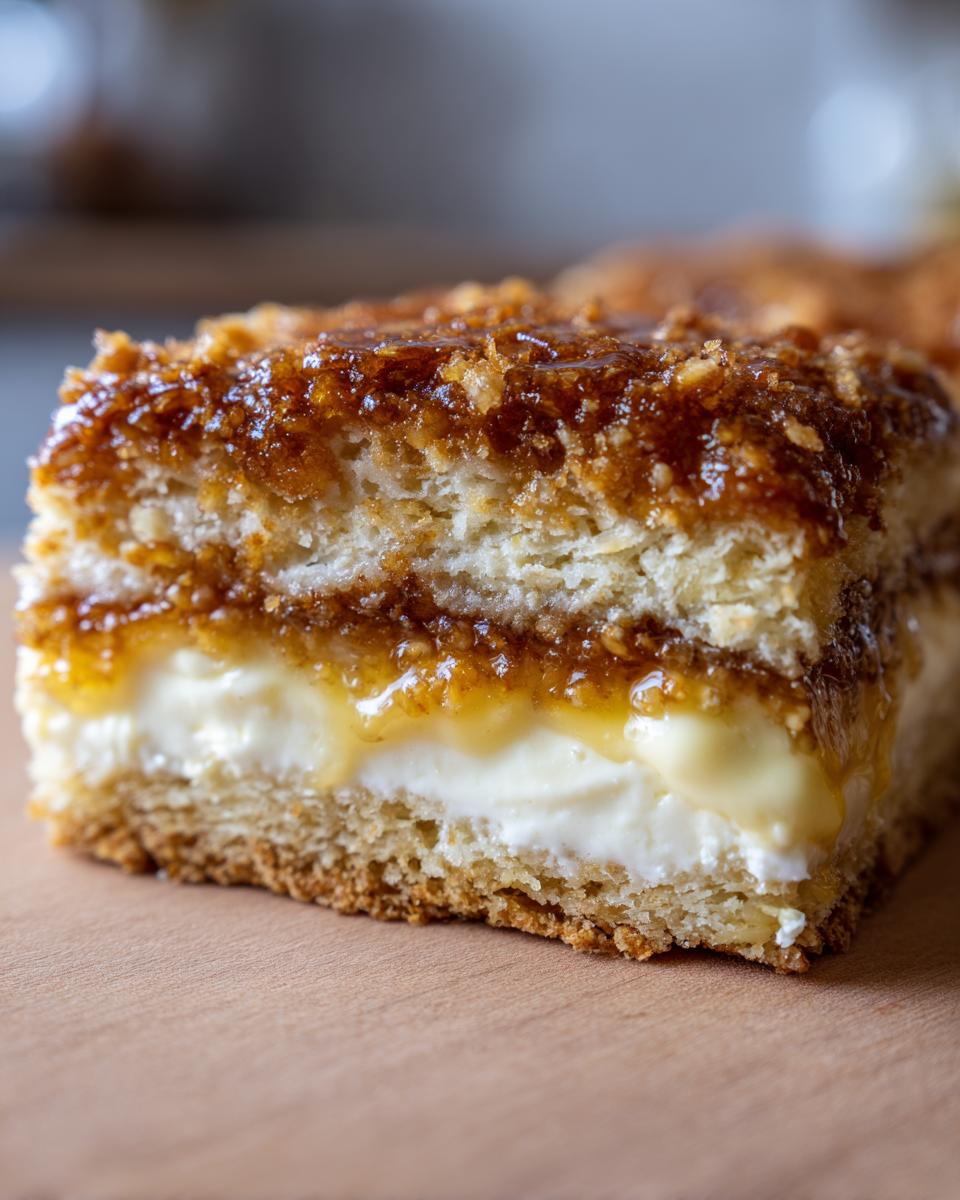
For the Creamy Vanilla Custard Dessert Filling
This filling is the cool contrast to that warm, crunchy topping. You’ll use whole milk and sugar, but the silent hero here is the cornstarch—that’s what helps us achieve that thick, pudding-like structure. You’ll need one egg yolk for richness, excellent vanilla extract for that classic flavor, and finally, another round of softened unsalted butter. We beat that butter in only *after* the custard is chilled; this step takes your standard pudding and turns it into an utterly decadent, stable Creamy vanilla custard dessert that won’t run out when you slice the cake.
Step-by-Step Instructions: How to Make Bee Sting Cake
Alright, this is where we put those gorgeous ingredients to work! Making the Bee Sting Cake right means following these steps closely. It’s not about rushing; it’s about respecting the process, especially since we’re working with live yeast dough. We need patience for that light base, but the assembly moves pretty quickly once the custard is chilled. Don’t forget to double-check your oven is set to 350°F (175°C) before we even start mixing the topping!
Making the Yeast Dough for Your Bee Sting Cake
First things first: wake up that yeast! Warm your milk until it’s just lukewarm—if it’s too hot, you’ll kill your yeast, and then we’re starting over! Whisk the yeast and sugar into the milk and watch it foam up in about five minutes. That foam is proof it’s alive and ready for action! Mix your flour and salt, then combine them with the yeast mixture and the egg. Once it looks shaggy, toss in that softened butter. Now, get ready to knead!
You need to knead this dough for a good 8 to 10 minutes until it’s smooth and elastic. I always test it by stretching a small piece—if it stretches thin enough to see light through it without tearing (that windowpane effect!), it’s perfect. Pop it into a greased bowl, cover it up, and let it peacefully double in size for one hour. When it’s ready, press it gently into your 9×13 inch pan and let it rest for 15 minutes while you make the magic topping.
Baking the Honey Almond Topping
This is the fun, gooey part! In a saucepan, combine the topping sugar, honey, heavy cream, and butter. Heat this over medium heat, but here’s the key: keep stirring constantly until it just simmers and the sugar is totally dissolved. As soon as it looks glossy and melted, pull it off the heat immediately. If you cook it too long, it will turn bitter when it bakes! Stir in those sliced almonds quickly. Now, spread this glorious mixture evenly over the rested dough in the pan. It needs 25 to 30 minutes in that preheated 350°F oven until it’s bubbly and beautifully golden brown. Let that bake and cool completely on a rack—don’t touch it!
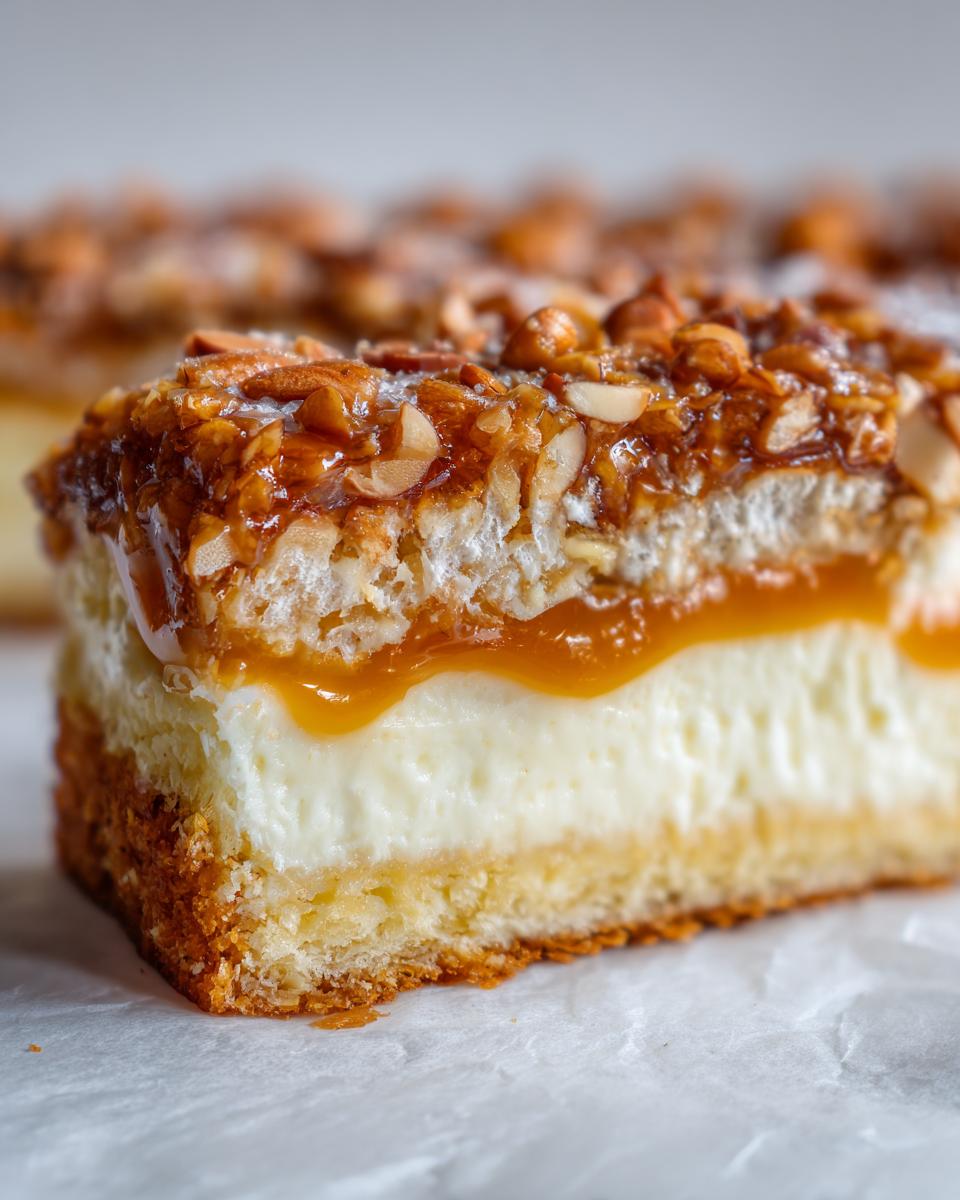
Preparing the Creamy Vanilla Custard Filling
While the cake cools (or honestly, while the dough is rising!), let’s get that filling ready. Whisk your milk, sugar, and cornstarch together in a saucepan. Cook this over medium heat, stirring like crazy until it gets thick, thick, thick, like real pudding. Once it’s off the heat, you MUST temper the egg yolk! Whisk just tiny bit of hot pudding into the yolk first—this stops the yolk from scrambling into bits. Then, pour that tempered mixture back into the pan and cook it for one final minute. Stir in the vanilla. Transfer it to a bowl and press plastic wrap directly onto the surface. If you leave an air gap, you’ll get a gross skin! Chill this completely.
Once the custard is fridge-cold, beat it until it softens up, then beat in that final half cup of softened butter until the whole thing is light and fluffy. This step changes everything, making it the star of your layered custard cake!
Assembling Your Layered Custard Cake: The Final Bee Sting Cake Steps
We waited for this moment! The yeast dough is baked perfectly golden, the topping still has that amazing crunch, and your vanilla custard filling is chilled solid and creamy. This Bee Sting Cake assembly phase is where the real satisfaction hits. But listen to me: Do NOT try to slice this when it is even slightly warm! If you cut into the warm cake base, that crunchy topping will shatter everywhere, and the cold custard will liquefy right out of the middle. Patience is key right now.
Take your completely cooled cake layer—the one with the beautiful honey almond topping—and place it on your cutting board. You need a long, sharp, sturdy knife for this. Slice the cake horizontally right through the middle, aiming for two even layers. It takes a bit of care because the bottom layer needs to hold up the filling, but if you baked it correctly, it should be firm enough.
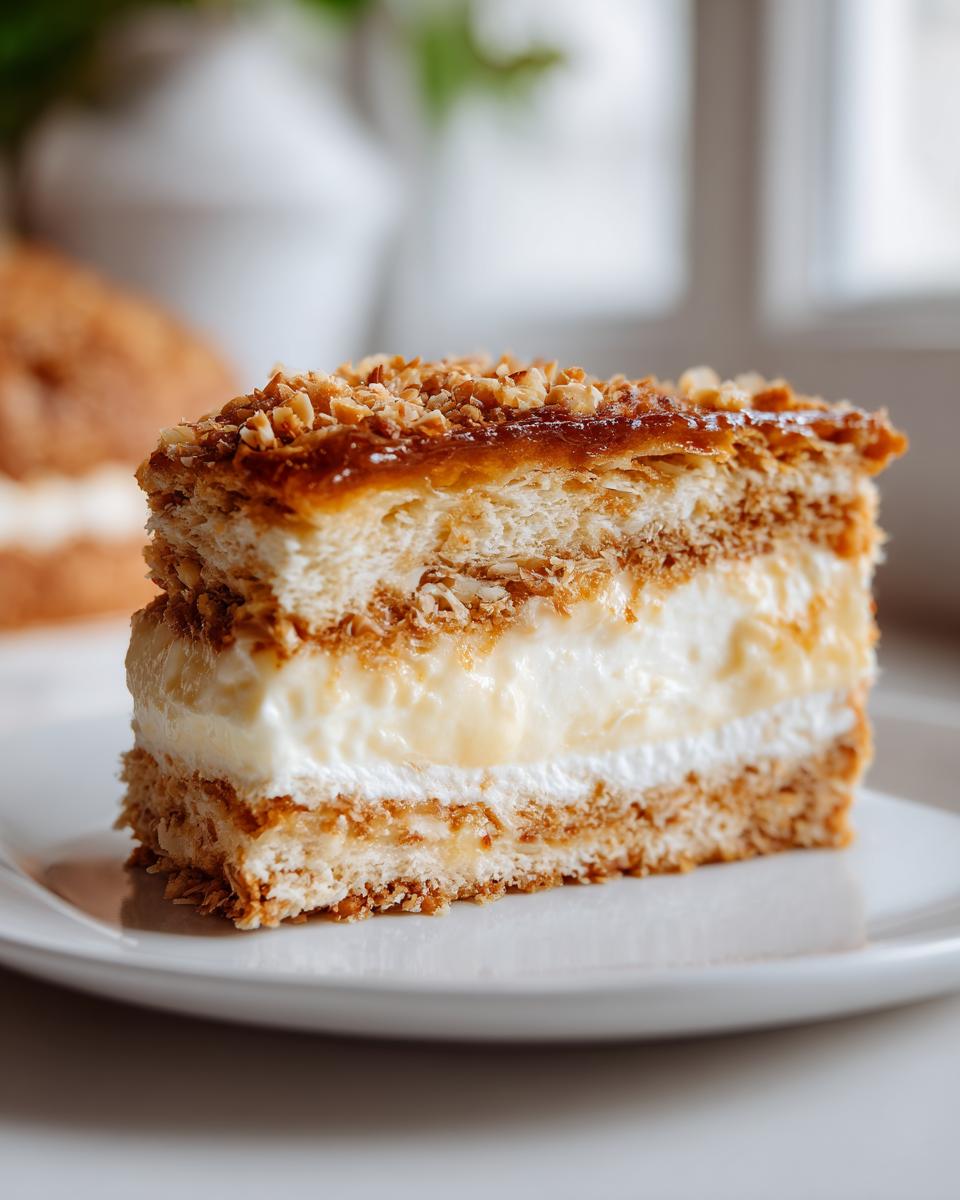
Once you have your two glorious halves, take the bottom layer and spread that luscious, cool, creamy filling evenly across it. I use an offset spatula to make sure I get an even layer right to the edges. You want a generous mound of that Creamy vanilla custard dessert richness!
Gently lift the top layer—the one with the crunchy topping—and place it carefully over the cream. Press down just a tiny bit, just enough to set it in place. This completes the transformation into a stunning Layered custard cake masterpiece! But we aren’t quite done yet. For the best results, you need this cake to hug itself together in the fridge. Wrap that assembled Bee Sting Cake loosely and let it chill for at least two full hours. This time lets the moisture from the cream soften the yeast base just slightly, making it easier to cut cleanly. This cake is spectacular when served cold straight from the refrigerator. When you’re ready to show it off, check out my favorite dessert recipes for pairing ideas!
Tips for Success Making Authentic German Bee Sting Cake
I want you and everyone reading this to have a perfect Bee Sting Cake experience! Seriously, making a Bienenstich that tastes like it came from a dedicated German bakery requires paying attention to just a few crucial details. I learned these the hard way, so you don’t have to! When I first tried this recipe, I struggled with the dough getting too wet from the moisture in the topping, but these tips fixed everything for me.
Here are the secrets I rely on every single time I bake this cake, especially since we’re using that standard 9×13 inch pan for a crowd-pleasing size:
- Don’t Overbake the Base! This is huge for preventing a soggy bottom when you add the custard later. Because the almond topping is so moist and sugary, it keeps releasing heat and moisture while it cools. You want to pull the cake out when the dough underneath is just set—it should still feel soft, not dry or crusty. It’s better to slightly underbake the base than to dry it out completely.
- Chill that Custard Completely. I mean rock hard! If your vanilla custard filling is even slightly warm or soft when you layer it, it will melt when it hits the room-temperature cake layer and just ooze everywhere when you cut it. That beautiful, silky texture from the butter only comes through when both the custard base and the added butter are properly cold before you begin whipping them together.
- Use a Serrated Knife for Slicing. When you go to slice the cooled, topped layer horizontally for filling, don’t use a standard knife; it will drag the sticky almond topping right off the top! A long, sharp, serrated knife is your best friend here. Use a gentle sawing motion rather than leaning down hard. It takes practice, but you’ll get those clean, professional-looking layers. You can see some general tips about layering in my post on perfect layers, but the principle of cutting gently remains the same!
- Trust the Chill Time. That final two-hour chill after assembling the Layered custard cake isn’t just a suggestion; it’s mandatory. This allows the cream to firm up and the yeast dough to absorb just a little bit of that custard moisture, balancing the bite perfectly. If you cut into it warm, you’ll be disappointed. If you want to check out an authentic version that inspired some of my tweaks, take a peek at this great recipe!
Ingredient Notes and Substitutions for Bee Sting Cake
When you’re tackling an Authentic German cake like this Bienenstich, I always encourage using the ingredients called for, but I also know life happens—sometimes the pantry just doesn’t cooperate! I’ve tested a few swaps over the years, especially when dealing with last-minute baking inspiration. The key here is understanding what flavor or texture you need to replace.
Let’s look closely at a few specific components in this Bee Sting Cake recipe, particularly for that glorious topping and the dough.
Choosing Between Sliced and Slivered Almonds
The recipe calls for sliced almonds, and I highly recommend sticking to that if you can manage it. Sliced almonds provide great surface coverage for that sweet, Caramelized almond topping. If you only have slivered almonds, you can absolutely use them! Slivered almonds are thinner and might bake up slightly crispier or even sink a little more into the honey mixture, but they will still taste fantastic. Just try not to use chopped nuts, as they tend to burn faster when baked that close to the sugar.
The Importance of Real Honey in Your Honey Almond Cake
This is a non-negotiable ingredient for me! Since this is a Honey almond cake, the flavor of the honey really shines through in the topping. Please use real honey—clover, wildflower, whatever you have that smells sweet. Avoid using pancake syrup or golden syrup substitutes here. They won’t caramelize the same way, and you’ll lose that deep, earthy sweetness the cake needs to balance the vanilla custard.
Can I Substitute the Yeast?
This recipe is built around a yeast dough base—that light, slightly chewy texture won’t happen with baking powder like a standard cake. However, if you’re short on time and really need an *easy* version today, you can technically switch to a baking powder-leavened cake batter. Just skip step 1 (the yeast proofing) and proceed directly to mixing the flour, salt, egg, and butter, adding about 2 teaspoons of baking powder along with the dry ingredients in step 2. Be warned, though: it will taste more like a pound cake and less like a true Traditional German dessert. It’s a workable shortcut, but for the true Bienenstich flavor, stick to the yeast!
Storage and Reheating Instructions for Leftover Bee Sting Cake
Oh, if you have leftovers, you are one lucky person! Leftover Bee Sting Cake is glorious, but since this masterpiece features that dairy-rich vanilla custard filling, we have to treat it right for storage. This isn’t like keeping out a plain cookie; the cream needs proper care.
The immediate rule of thumb for this Layered custard cake is: it must always be refrigerated. Never, ever leave this cake sitting out on your counter for more than about an hour or two. That creamy filling is too precious (and too perishable!) to risk it. Wrap the entire cake tightly, or cover individual slices well with plastic wrap or foil. This keeps the crunchy almond topping from getting weird in the fridge air, and it stops the pastry cream from drying out.
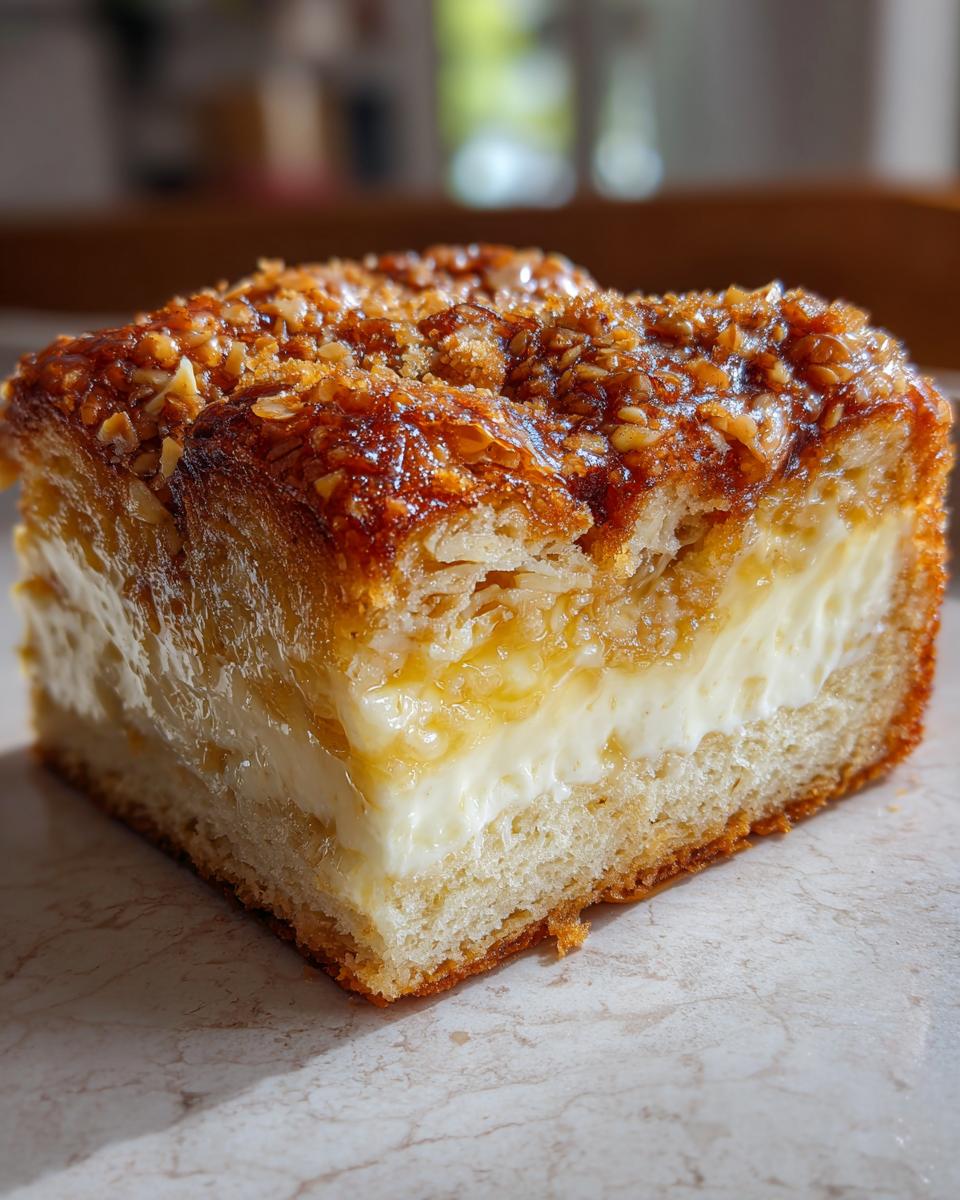
I find this cake is actually even *better* on the second day. That mandatory chilling time we talked about in the assembly ensures the yeast dough base has slightly softened against the cool cream, making it incredibly tender and easy to slice. So, yes, store it in the fridge! You’ll get a good 3 to 4 days out of it stored correctly.
Serving Temperature for Your Bienenstich
Here’s the fun debate: serving temperature. I know some people love cold dessert, but honestly, taking the pure chill off of the Creamy vanilla custard dessert filling makes it taste even creamier and lets the vanilla flavor really sing. My personal trick is taking the slice out of the fridge about 20 to 30 minutes before serving.
If you let it sit on the counter for that half-hour, the filling warms up just enough to be luscious without turning soupy. The crunch of the topping stays intact, and the whole experience feels fresher. Remember, this is a beautiful one to share with your afternoon coffee! If you want to see how some of the professionals handle this classic, check out the notes over at America’s Test Kitchen. They have some wonderful temperature insights too!
Can I Freeze Leftover Bee Sting Cake?
I advise against freezing this German Bee Sting Cake if you can help it, especially because of the filling. Custards and yeast doughs just don’t freeze and thaw perfectly together. The dough can sometimes become a little dry, and the moisture separation in the cream can sometimes leave the texture grainy once thawed. If you absolutely must freeze it, wrap slices individually *very* tightly in plastic wrap, then foil, and thaw them slowly overnight in the refrigerator. But honestly, this cake is so good, it hardly ever lasts long enough to worry about freezing!
Frequently Asked Questions About the Bee Sting Cake
I always get questions after I bake this spectacular dessert, and I love answering them because it reminds people that this Bee Sting Cake is totally achievable at home! You’ve got the recipe, but maybe you’re missing one ingredient or wondering about technique. Don’t stress! That’s what this section is for—clearing up any last-minute worries so you can bake with confidence.
Why is it called Bee Sting Cake?
This is my favorite question! The name Bienenstich translates directly, but the story isn’t about an actual bee sting, thankfully! It’s because the crunchy honey-almond topping is so gloriously sweet and crackly that the original bakers said it was sweet enough to tempt a grumpy bee into stinging it! It’s a cute way of saying the topping is irresistible. Who knew a Honey almond cake could have such a dramatic name?
Can I use instant yeast in my yeast cake recipe?
Yes, you absolutely can, and it can save you a few minutes! If you use instant yeast instead of active dry yeast, you can skip the whole process of dissolving it in warm milk and waiting for it to foam up. Just mix the instant yeast directly into your dry flour mixture when you add the salt. This makes the first part of your Yeast cake recipe much faster, but remember, I still recommend using lukewarm milk, not hot, even with instant yeast, just to be gentle on the dough when mixing.
Do I have to include the Creamy vanilla custard dessert filling?
Oh, dear, I wouldn’t recommend skipping the filling if you want the *authentic* experience! The creaminess is what balances the dense, caramelized crunch on top. Without it, you essentially just have a sweet, very crunchy honey almond flatbread. If you’re truly in a rush or just don’t want the custard, a great alternative for a simpler coffee break treat is to just stick to the baked base and dust the cooled cake heavily with powdered sugar instead of slicing it horizontally. It’s faster, but it won’t be the classic Layered custard cake we are aiming for today.
Is this considered a keto meal plan delivery option?
Absolutely not, and I giggle a little bit every time I see that pop up! This Bee Sting Cake is made with sugar, honey, flour, and cream—it’s the opposite of low-carb! If you’re looking for something like a low-carb beverage, this cake isn’t it! This is pure, traditional European indulgence designed for weekend baking projects, not for sticking to a strict keto meal plan delivery schedule. Enjoy it fully!
Can I use a different sweetener instead of honey in the topping?
You could try using maple syrup or corn syrup, but honestly, it changes the whole profile of the Honey almond cake topping. Honey has a specific floral note and thickness that allows that caramelization to set up just right. If you swap it for maple syrup, the flavor won’t be as deep, and the texture might be a little softer rather than that characteristic crunchy layer. For true Bienenstich flavor, I really push for real honey!
Share Your German Bee Sting Cake Creations
Baking is meant to be shared, and I absolutely live for seeing the beautiful Bee Sting Cake creations you all bring to life! Seriously, when you nail that honey-almond topping or slice into those perfect layers, I want to see it. Tag me on social media! I love seeing how this traditional dessert looks in kitchens all over the country.
Don’t be shy about leaving a rating and reviewing the recipe right here on the page. Knowing what worked for you helps me refine these recipes for everyone else, keeping our promise of tested and perfected bakes alive. If you loved this weekend baking project but need something easier for a weeknight dinner, maybe check out some tips around meal planning to streamline your schedule.
I spend hours making sure these classic European recipes are foolproof. Once you conquer this Bienenstich, what classic European cakes should I cover next? Let me know in the comments below! And be sure to check out what my friends are up to—I loved their take on this amazing classic German cake too!
Share Your German Bee Sting Cake Creations
Baking is meant to be shared, and I absolutely live for seeing the beautiful Bee Sting Cake creations you all bring to life! Seriously, when you nail that honey-almond topping or slice into those perfect layers, I want to see it. Tag me on social media! I love seeing how this Traditional German dessert looks in kitchens all over the country.
Don’t be shy about leaving a rating and reviewing the recipe right here on the page. Knowing what worked for you helps me refine these recipes for everyone else, keeping our promise of tested and perfected bakes alive. If you loved this weekend baking project but need something easier for a weeknight dinner, maybe check out some tips around meal planning to streamline your schedule. Seriously, baking a showstopper like this takes time, and I totally get it if you need help organizing the rest of your week!
I spend hours making sure these classic European recipes are foolproof. Once you conquer this Bienenstich, what other classic European cakes should I cover next? Let me know in the comments below! And be sure to check out what my friends are up to—I loved their take on this amazing classic German cake too!
PrintAuthentic German Bee Sting Cake (Bienenstich)
Make a traditional German Bee Sting Cake featuring a light yeast dough, creamy vanilla custard filling, and a signature caramelized honey-almond topping.
- Prep Time: 45 min
- Cook Time: 30 min
- Total Time: 135 min
- Yield: 12 servings
- Category: Dessert
- Method: Baking
- Cuisine: German
- Diet: Vegetarian
Ingredients
- For the Yeast Dough: 1 cup whole milk, 1/4 cup granulated sugar, 2 1/4 teaspoons active dry yeast, 3 cups all-purpose flour, 1/2 teaspoon salt, 1 large egg, 1/4 cup unsalted butter (softened)
- For the Honey-Almond Topping: 1/2 cup granulated sugar, 1/4 cup honey, 1/4 cup heavy cream, 1/2 cup sliced almonds, 2 tablespoons unsalted butter
- For the Vanilla Custard Filling: 1 1/2 cups whole milk, 1/2 cup granulated sugar, 1/4 cup cornstarch, 1 large egg yolk, 1 teaspoon vanilla extract, 1/2 cup unsalted butter (softened)
Instructions
- Prepare the Yeast Dough: Warm the milk until lukewarm. In a small bowl, dissolve the sugar and yeast in the warm milk. Let stand for 5 minutes until foamy.
- In a large bowl, whisk together the flour and salt. Add the yeast mixture and the egg. Mix until a shaggy dough forms.
- Add the softened butter and knead the dough on a floured surface for about 8 to 10 minutes until smooth and elastic. Place the dough in a greased bowl, cover, and let it rise in a warm place for 1 hour, or until doubled in size.
- Preheat your oven to 350°F (175°C). Grease and flour a 9×13 inch baking pan. Punch down the risen dough and press it evenly into the prepared pan. Let it rest for 15 minutes.
- Prepare the Topping: In a small saucepan, combine the sugar, honey, heavy cream, and butter. Heat over medium heat, stirring constantly, until the sugar dissolves and the mixture simmers. Remove from heat and stir in the sliced almonds.
- Spread the almond mixture evenly over the dough. Bake for 25 to 30 minutes, or until the topping is golden brown and bubbling. Let the cake cool completely on a wire rack.
- Prepare the Custard Filling: In a saucepan, whisk together the milk, sugar, and cornstarch. Heat over medium heat, stirring constantly, until the mixture thickens into a pudding. Remove from heat.
- In a separate small bowl, whisk the egg yolk. Temper the yolk by slowly whisking in about 1/2 cup of the hot pudding mixture. Pour the tempered yolk mixture back into the saucepan. Cook for 1 minute more, stirring constantly.
- Remove from heat, stir in the vanilla extract. Transfer the custard to a bowl, press plastic wrap directly onto the surface to prevent a skin from forming, and chill completely.
- Once chilled, beat the custard until smooth. Beat in the 1/2 cup of softened butter until the filling is light and creamy.
- Assemble the Cake: Once the cake is cool, slice the cake horizontally into two equal layers. Spread the vanilla custard filling evenly over the bottom layer. Place the top layer (the one with the almond topping) back on top.
- Chill the cake for at least 2 hours before slicing and serving. This cake is excellent for weekend baking projects.
Notes
- For a bakery-style result, slice the cake in half horizontally after baking and cooling, then fill it with the custard.
- If you are interested in simplifying your weekly cooking routine, consider looking into meal planning services.
- This cake is best served chilled to keep the custard firm.
Nutrition
- Serving Size: 1 slice
- Calories: 450
- Sugar: 35g
- Sodium: 250mg
- Fat: 25g
- Saturated Fat: 14g
- Unsaturated Fat: 11g
- Trans Fat: 0.5g
- Carbohydrates: 50g
- Fiber: 2g
- Protein: 7g
- Cholesterol: 120mg