

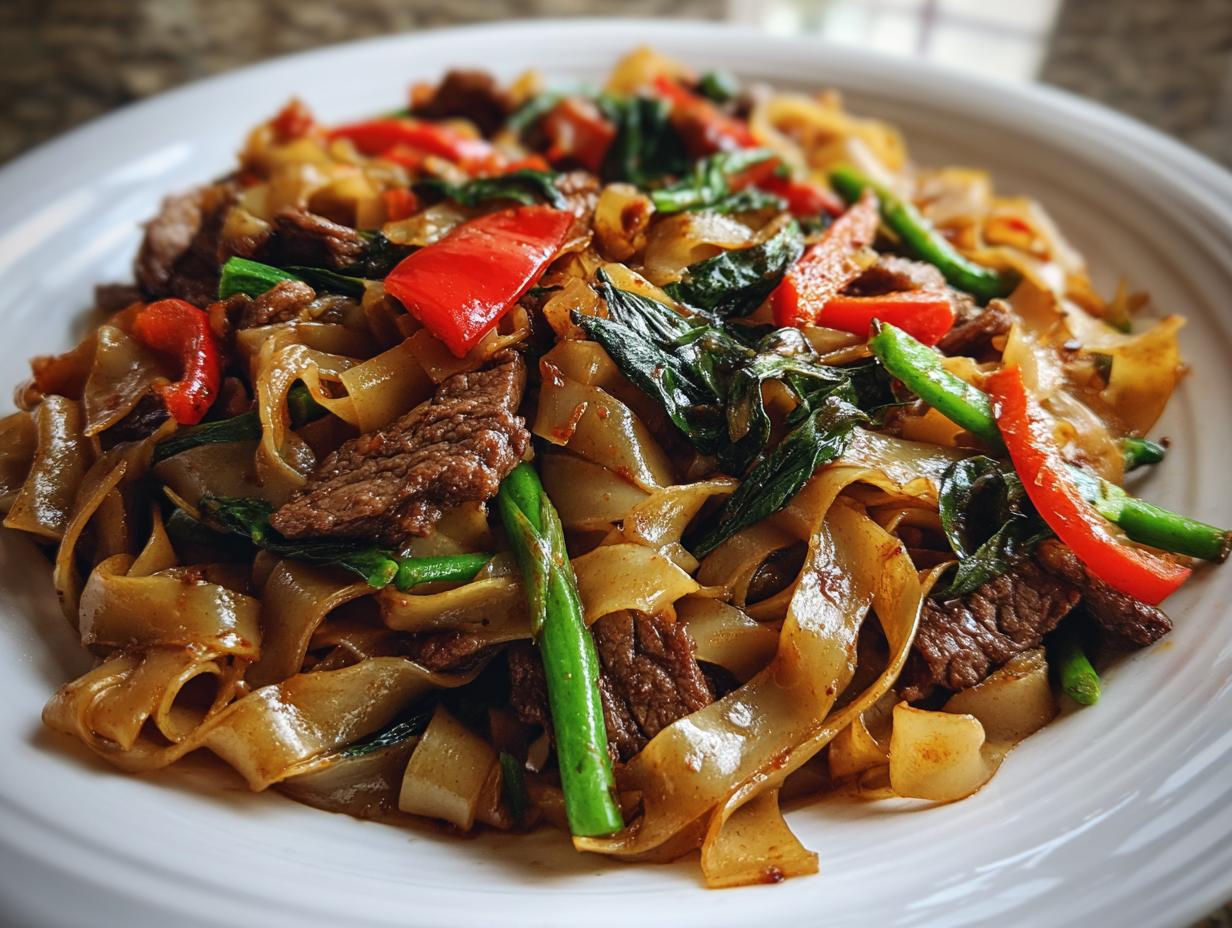
That deep, smoky, fiery flavor you get from the best street food stalls—I used to think that taste was impossible to replicate in my own kitchen. Too much fire, too many secret ingredients, right? Wrong! I’m Claire, and if there’s one thing I’ve learned taking my corporate stress and channeling it into my kitchen therapy, it’s that authenticity *is* achievable, even on a busy Tuesday night. Forget takeout menus; today, we’re conquering the famous **thai drunken noodles with beef**, or Pad Kee Mao. This isn’t just stirring noodles; it’s about capturing that incredible, spicy, aromatic magic. Trust me, this recipe is so foolproof, you’ll feel like you’ve unlocked a culinary secret. You can find more easy weeknight inspiration right here: delicious weeknight dinners!
- Why This is the Best Thai Drunken Noodles with Beef Recipe
- Gathering Ingredients for Thai Drunken Noodles with Beef
- The Pad Kee Mao Sauce Recipe Secrets
- Step-by-Step Authentic Pad Kee Mao Instructions
- Tips for Perfect Thai Basil Noodles Beef
- Serving Suggestions for Your Weeknight Thai Beef Dinner
- Storage and Reheating Thai Drunken Noodles with Beef
- Frequently Asked Questions About Pad Kee Mao
- Nutritional Estimate for This Dish
Why This is the Best Thai Drunken Noodles with Beef Recipe
I know what you’re thinking. Pad Kee Mao—the wok-fired noodles—sounds intimidating. But that’s where we change the game! My goal, as always, is to bring that incredible vibrancy home without the stress. This recipe cuts right to the chase, focusing on what gives this dish its signature punch.
- It delivers incredible flavor quickly, making it a genuinely easy weeknight wonder.
- We nail that crucial spicy profile using fresh chilies, meaning serious heat when you want it.
- The technique for slicing the beef ensures every single bite is tender—no tough chewiness here!
If you want to know more about the philosophy behind making simple recipes shine, check out my story here. It all comes down to good ingredients and showing them a little love!
Achieving Authentic Flavor in Your Pad Kee Mao Beef
The soul of this spicy Thai stir fry noodles definitely lives in the sauce and the herbs. It’s a balancing act, truly. We need enough salty umami from the fish sauce and soy sauces, just a hint of sweetness to round out the burn, and then the incredible, fragrant lift from the basil. When you use holy basil—or even the sweet basil substitute I suggest—you get that unmistakable fresh, peppery aroma that screams authentic. It’s what separates this dish from a standard noodle stir-fry.
Gathering Ingredients for Thai Drunken Noodles with Beef
Okay, let’s talk shopping. When you’re making an authentic dish like this, the ingredients aren’t just filler; they are the stars! Don’t skip anything in this list for the ultimate **Thai Drunken Noodles with Beef**. Remember, my mission is to make sure your bakes—or in this case, your stir-fries—turn out perfectly accessible, and that starts with having everything measured and ready before the wok gets hot.
Here’s what you’ll need for about four hearty servings of this spicy noodle dish:
- 1 pound fresh wide rice noodles (If you can find them fresh, grab them! They make the texture unreal.)
- 1 pound flank steak or sirloin, thinly sliced against the grain—and listen, freezing the steak for just 30 minutes before slicing makes this so much easier.
- 2 tablespoons vegetable oil
- 4 cloves garlic, minced (I measure this with my heart, but seriously, don’t skimp on it!)
- 1 cup sliced onion
- 1 red bell pepper, sliced
- 1 cup baby corn, halved
- 1 cup green beans, trimmed
- 1/2 cup Thai holy basil leaves (If you have to use sweet basil, that’s okay, but that holy basil gives that signature peppery bite!)
- 1 to 3 Thai bird’s eye chilies, sliced (Be careful here! This is where the fire comes from. Start small if you’re new to this heat.)
- 1 tablespoon dark soy sauce (This is purely for that deep, gorgeous color.)
- 2 tablespoons light soy sauce
- 1 tablespoon oyster sauce
- 1 teaspoon fish sauce
- 1 teaspoon sugar
- 1/4 cup beef broth or water
Selecting and Preparing Wide Rice Noodles Beef Stir Fry Style
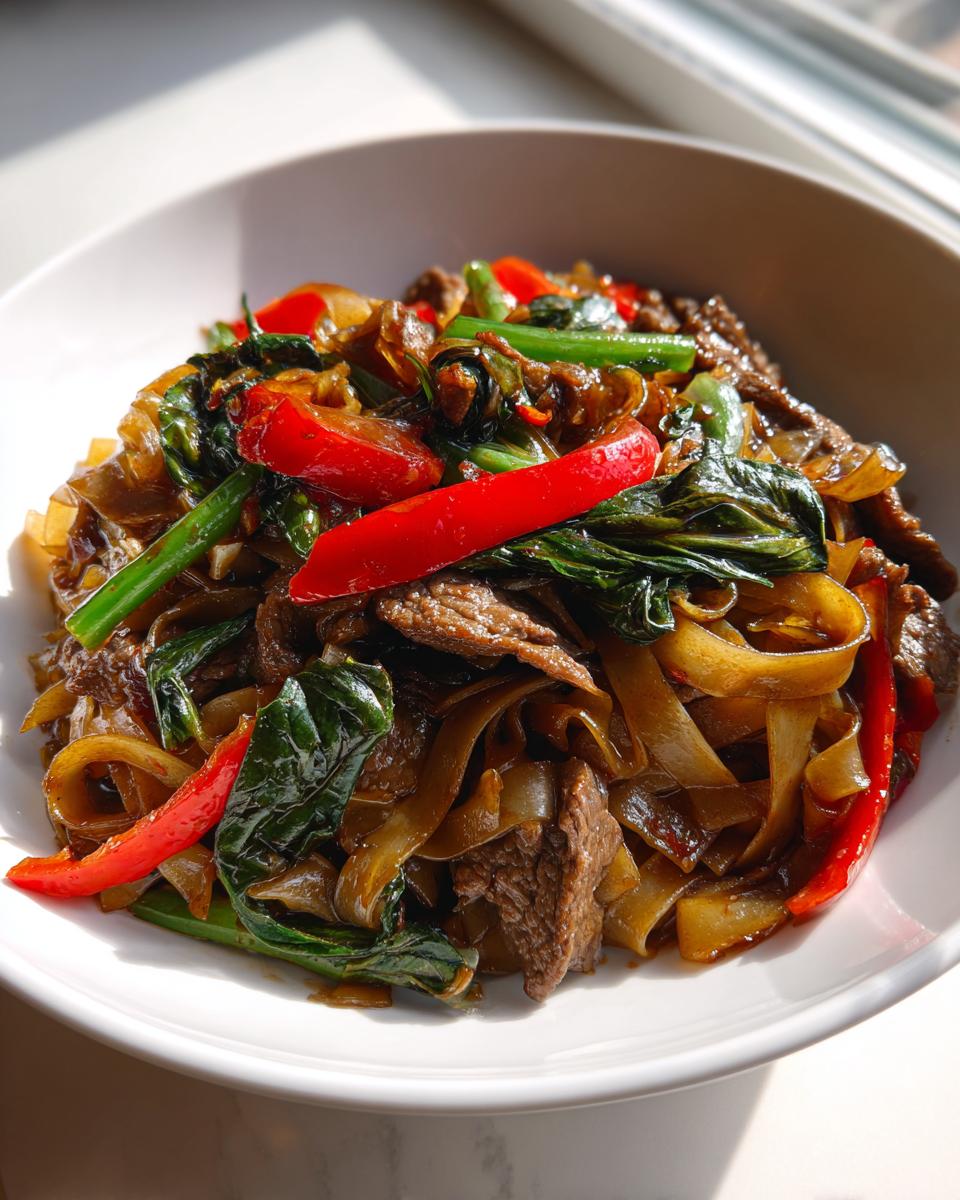
The noodle choice is non-negotiable for authentic texture. We are using the wide, flat rice noodles because they grab onto that spicy sauce so beautifully, which is key for a great **Wide Rice Noodles Beef Stir Fry**. If you bought fresh noodles, they usually just need a quick rinse and gentle separation—they are ready to go!
If you are using the dried version, which is perfectly fine, you need to manage their texture carefully. Soak them, but don’t boil them into mush! Follow the package instructions, but generally, you soak them right in hot tap water until they are pliable and bendy, but still have a definite firmness—we call that *al dente* in pasta language. Drain them the second they feel pliable, because they will finish cooking when you toss them into that super hot wok cooked rice noodles beef!
The Pad Kee Mao Sauce Recipe Secrets
If you’ve ever ordered takeout and thought, “How do they get this sauce so deeply flavored and perfectly coating?”—this is the section you need to pay attention to! We aren’t relying on bottled sauce here; we are building the *best drunken noodle sauce recipe* from scratch. Since this is meant to be quick, we mix this all in one little bowl while the beef is resting. Mix it up, give it a little whisk, and that’s it!
The secret sauce is all about getting that salty-sweet-umami trifecta right. You need those different types of soy sauce working together. Think of the light soy sauce as the primary salty seasoning, while the dark soy sauce is just there to make your noodles look like they came straight from a busy Bangkok street cart. It adds that gorgeous, deep brown hue we all crave.
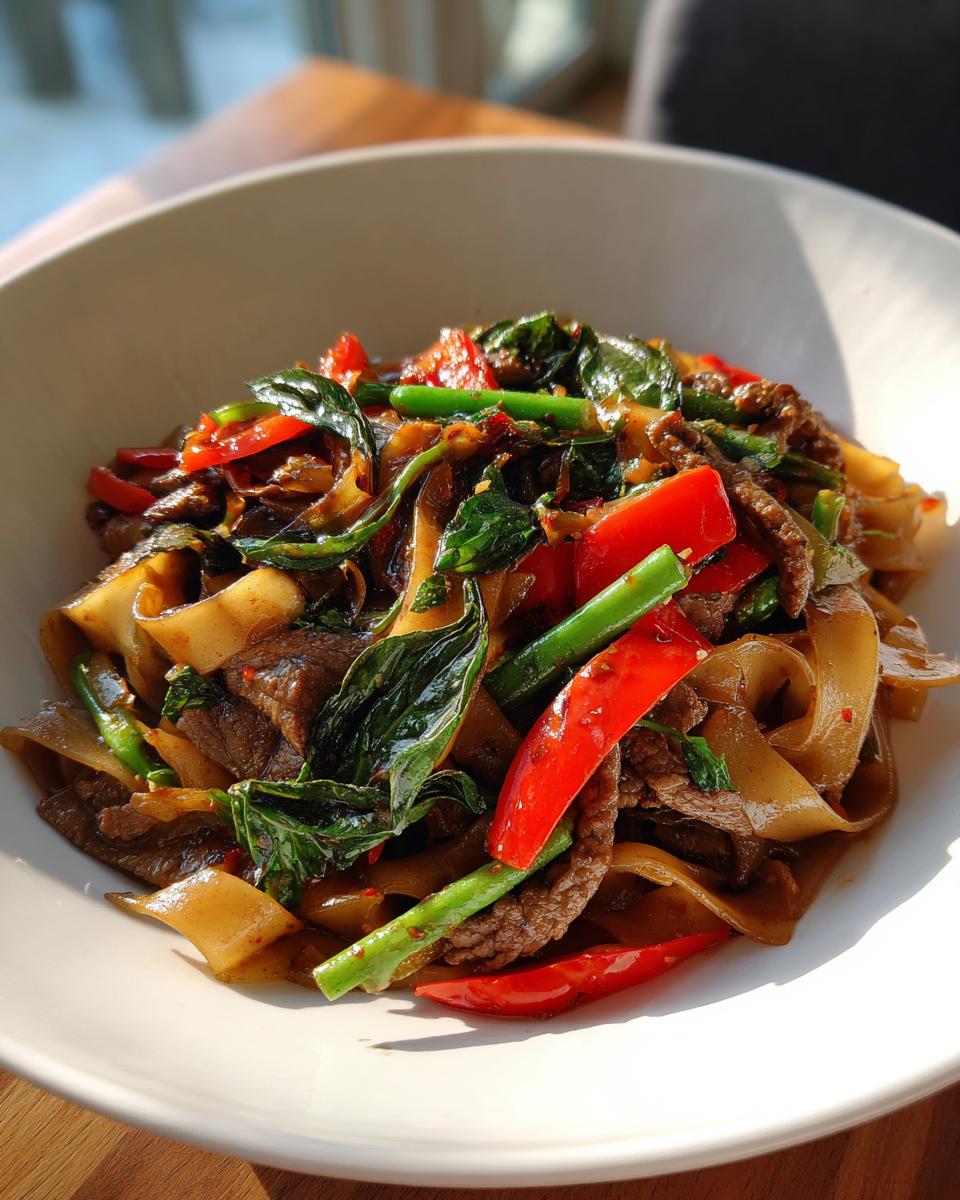
Seriously, tasting this sauce mixture before you add it to the wok is helpful. Does it taste too salty? Add a tiny pinch more sugar. Does it taste heavy? A drop more broth! It needs to be powerful because it’s coating a lot of noodles and veggies. Once you have your sauce ready, feel free to check out my tips for skillet dinners for when you want big flavor fast, but don’t want to fire up the wok!
- The Salts: Combine the light and dark soy sauce.
- The Umami: Add the oyster sauce—it brings depth that soy alone just can’t touch.
- The Punch: A quick hit of fish sauce for authentic funkiness.
- The Balance: A teaspoon of sugar is essential to balance the salt and the fire from those chilies we added earlier.
- The Liquid: Whisk in the beef broth or water to thin it just enough so it coats everything evenly without creating a soupy mess.
Whisk that all together until that sugar dissolves, and you are ready for the magic moment when everything hits that screaming hot wok!
Step-by-Step Authentic Pad Kee Mao Instructions
Alright, the planning is done, the sauce is mixed, and your ingredients are patiently waiting by the stove. Now it’s time to put on your fireproof apron because this next part moves *fast*. This is where we chase that elusive smoky magic—the “wok hei.” If you’ve made my easy fried rice recipe, you know the drill: high heat, constant motion, and no crowding the pan! If you try to cram everything in at once, you end up steaming your ingredients instead of searing them, and we want a sear! Trust me on this; work in batches if you have to.
Tenderizing the Beef for Your Spicy Thai Stir Fry Noodles
Before we even think about hitting the high heat, we need to make sure our beef plays nice. Remember that tip I mentioned earlier about partially freezing the steak? That is non-negotiable for getting those beautiful, thin slices needed for the best **spicy Thai stir fry noodles**. When the beef is slightly firm (not frozen solid, just firm to the touch), grab your sharpest knife and slice thinly against the grain. This breaks up those tough muscle fibers.
Once sliced, give that beef a little treatment—toss it with just a teaspoon of the light soy sauce from your pre-mixed sauce. This starts the marination process and adds instant flavor right at the start. When you throw it into the hot wok, you want it to brown beautifully and quickly, sealing in all that tenderness we worked to build.
Mastering the High-Heat Toss
Get your wok ripping hot—I mean, shimmering oil hot. Toss in the beef first, cook it just until it’s browned and cooked through (it takes barely a minute or two!), and then get it OUT of the pan and set it aside. We don’t want it overcooked while we deal with the veggies.
Next, the second tablespoon of oil goes in, right after the beef comes out. Immediately add your minced garlic and those wicked chilies. Stir like you mean it for just 15 seconds until the fragrance hits you hard—that’s your cue to toss in the onion, peppers, corn, and beans. Cook those hard veggies until they are crisp-tender, maybe two or three minutes tops.
Now, everything jumps back in: the noodles, the reserved beef, and pour that glorious Pad Kee Mao sauce right over the top. This is the crucial moment! You must toss constantly and vigorously over that high heat for about 60 to 90 seconds. You’re using the *heat* of the wok to meld the sauce into the noodles and let them dry out just slightly, achieving that perfect texture.
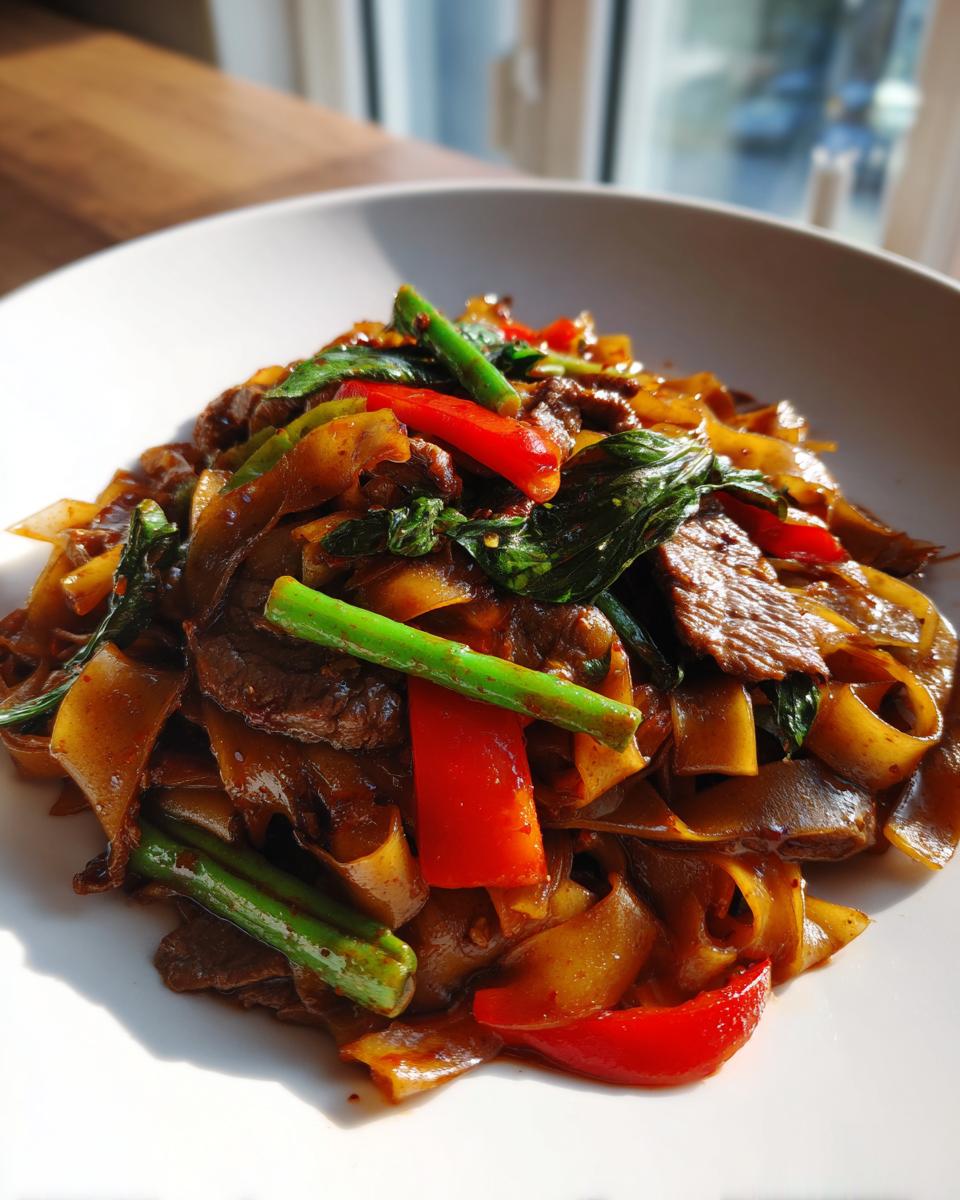
When you see everything coated, you need to move fast for the finale: take the wok completely *off* the burner. The residual heat is enough. Stir in your basil leaves until they just start to wilt. Don’t cook the basil on direct heat, or it turns black and bitter! Serve immediately while it’s piping hot, and enjoy that fresh, spicy blast!
Tips for Perfect Thai Basil Noodles Beef
We’ve covered the main steps, but sometimes those little details can make the difference between a good stir-fry and a restaurant-quality one. Since we’re aiming for bliss in every bite, here are my personal takeaways, especially regarding the key aromatic players that give this dish its name.
The temperature control during the final toss is vital. If your burner isn’t strong enough to create true wok hei—that smoky sear—you can simulate it by working in smaller batches. Seriously! Even if you think your pan is big enough for everything, halve your recipe, cook twice, and keep the first batch warm in a low oven. It makes cleanup a bit more involved, but the texture payoff is worth it. Think back to my advice on proper creaming for the pound cake—the technique matters as much as the ingredients!
If you’re tweaking the spice level, remember to introduce the chilies early with the garlic. This allows their oils to infuse into the cooking oil, spreading the heat throughout the entire dish evenly. If you drop them in at the very end, you’ll just get pockets of pure fire, which is great if you’re feeling brave, but not ideal for an even experience.
And let’s talk about the basil one more time. If you find Thai Holy Basil, use it! It has a strong, slightly peppery, almost clove-like scent that distinguishes it. If you’re stuck with standard sweet basil, add just a tiny splash of peppermint extract right at the very end with the basil—it tricks the palate a bit and mimics that sharper profile. It’s my little kitchen secret when I’m out of the good stuff! You can check out my thoughts on other quick Asian-inspired meals, like my chicken stir-fry recipe, for more flavor hacks.
Finally, try to have your vegetables pre-sliced and your meat trimmed right after you mix the sauce. Once those garlic and chilies hit the pan, you have about three minutes before you need to add the next ingredient. Having everything prepped ahead of time means you can focus solely on tossing and enjoying the process!
Serving Suggestions for Your Weeknight Thai Beef Dinner
These spicy noodles with beef recipe bowls are so intensely flavored—that fire and those spices are big personalities! Because Pad Kee Mao is generally a whole meal in one giant, delicious tangle, you don’t need a lot of fuss alongside it. In fact, I think the best pairing is something that cools things down just a touch right after you’ve burned your tongue in the best possible way!
When I’m making this for a weeknight dinner, I usually keep the sides super simple. A big bowl of sliced cucumbers tossed with a tiny drizzle of rice vinegar and a pinch of sugar is fantastic. The coolness of the cucumber is the perfect palate cleanser between those fiery bites. It’s quick, easy, and it gives you a tiny bit of fresh crunch that contrasts nicely with the soft rice noodles.
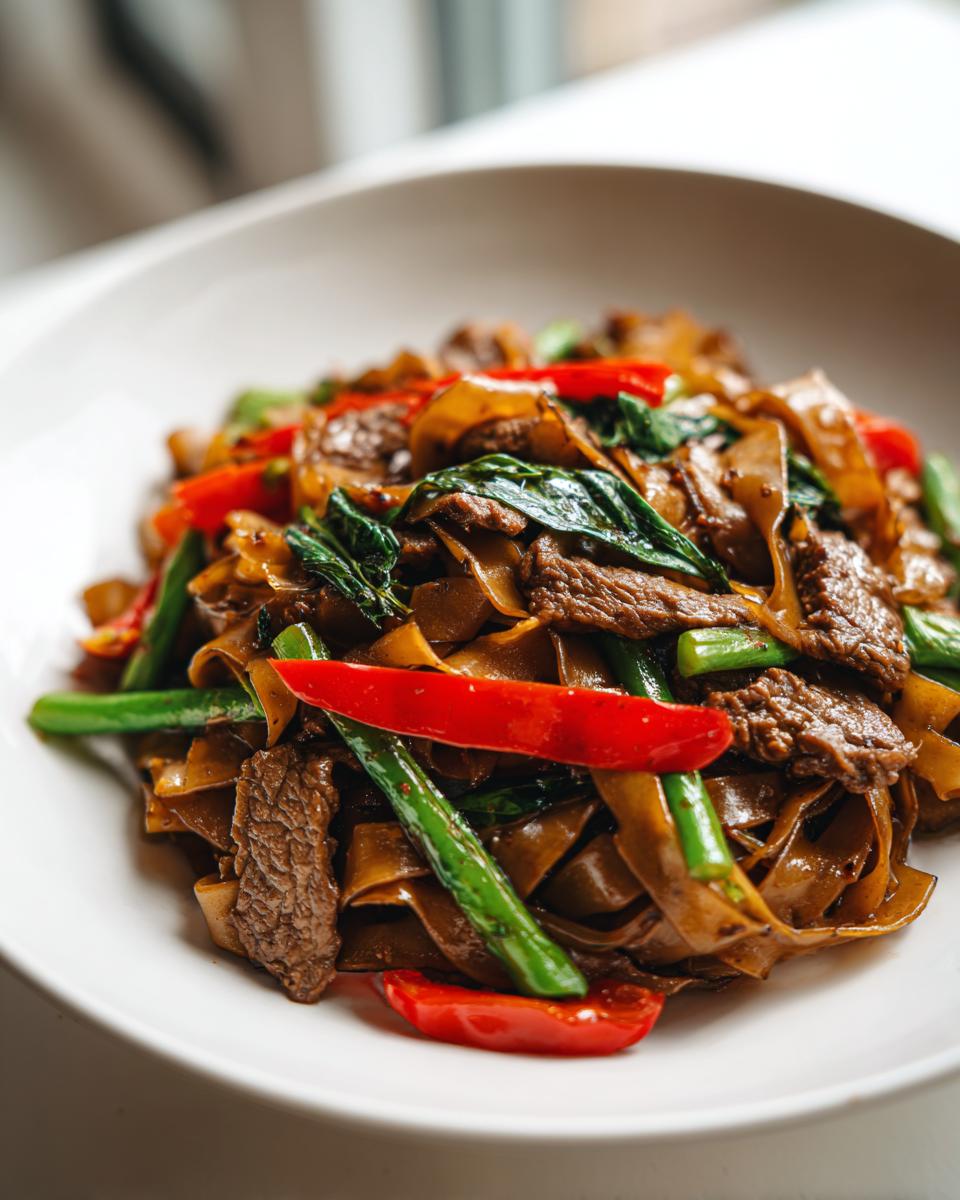
If you want to whip up a little something special to drink that feels elevated but still keeps the focus on the food, don’t worry about complex mocktails or anything too fussy for a weeknight. If you’re looking for a simple, sophisticated drink that pairs beautifully with spice, I actually have a wonderful little recipe for a maple bourbon cocktail that works surprisingly well cutting through the heat without being overpowering. If you’re keeping it family-friendly, ice-cold sparkling water with a fat wedge of lime is always my top choice!
The goal here is celebrating that vibrant **Thai beef noodle stir fry Thai style** flavor, so keep the accompaniments light. No heavy rice needed, because the noodles are already doing the heavy lifting for your weeknight meal!
Storage and Reheating Thai Drunken Noodles with Beef
Oh, the eternal leftover dilemma! These intensely flavored spicy noodles are always better fresh, straight out of that screaming hot wok, but let’s be real—sometimes life happens, and you’ve got Pad Kee Mao waiting in the fridge the next day. I’ve experimented with reheating these a hundred times, and I have strong opinions on how to do it right!
The biggest issue you’ll face with any noodle stir-fry holding leftovers is the moisture level. Those glorious wide rice noodles are sponges, and they tend to soak up all the sauce while resting, sometimes becoming a little clumped together. Don’t despair, though! We are going to bring that flavor back to life.
First things first: storage. You must use a shallow, airtight container. If you seal up a hot, steaming container of noodles, they will steam themselves into one giant sticky brick of sadness. Let those leftovers cool down on the counter for about 30 minutes first. Then slide them into the fridge. They’ll keep nicely for two, maybe three days max.
The Best Way to Reheat Spicy Noodles with Beef Recipe
Please, for the love of all things delicious, avoid the microwave if you can! Microwaves blast noodles with harsh heat that changes the texture completely—they get rubbery or sometimes brittle. We need gentle, high-heat revival.
My absolute favorite method for reviving these **spicy noodles with beef recipe** leftovers is using a clean wok or a large non-stick skillet:
- Add just a splash—maybe a teaspoon—of water or beef broth to the bottom of the pan. This steam is vital for rehydrating the noodles slightly.
- Heat the pan over medium-high heat until that liquid begins to shimmer and steam lightly.
- Toss in your cold noodles and beef mixture. Toss constantly. What you are doing is reintroducing heat evenly while allowing that bit of added moisture to soften the noodles back up.
- It only takes about three to four minutes. You’ll see the sauce redistribute itself and the beef warm through.
If you absolutely *must* use the microwave (maybe you’re late for work!), sprinkle a tiny bit of water over the portion you want to eat, cover it loosely with a damp paper towel, and hit it in 30-second intervals, tossing well in between each round. It won’t be the same smoky experience, but it’s miles better than eating them cold straight from the container!
Can I Freeze Leftover Drunken Noodles?
Honestly? I advise against it for this specific dish. Freezing and then thawing cooked rice noodles tends to make them really brittle, and the intense flavor of the sauce doesn’t always hold up perfectly. If you’re going to freeze something, make my easy chicken stir-fry recipe instead—thicker proteins and veggies often fare better. For the **Thai Drunken Noodles with Beef**, fresh or cold fridge leftovers are definitely the way to go for the best texture!
Frequently Asked Questions About Pad Kee Mao
When you’re trying to nail a dish like this at home, of course, you’re going to have questions! Trying to capture that intense street-food magic can feel tricky, but I promise we can troubleshoot anything. Think of this section as a little chat we’re having right over the kitchen counter before we dig into our amazing bowls of noodles. I want you to approach this with total confidence, just like you would when tackling one of my classic bakes!
Can I use chicken or shrimp instead of beef in this Thai Drunken Noodles recipe?
Absolutely, yes! This recipe is wonderfully adaptable. If you decide to go with chicken, use thinly sliced chicken breast or thigh. You will just need to increase the sauté time slightly in the wok—maybe 3 to 4 minutes until it’s cooked through—before you remove it and set it aside with the veggies. Shrimp cooks much faster than beef or chicken, though! If you swap to shrimp, make sure to toss them up right towards the end when you add the noodles and the sauce. They only need about 90 seconds total to cook through; if you add them too early, they get rubbery!
How spicy are Thai Drunken Noodles supposed to be?
That’s the fun part! They are *supposed* to be spicy! Pad Kee Mao literally translates to something like ‘stir-fried drunken noodles,’ and the story goes it was the perfect hangover cure because it was loaded with chilies. In my recipe, I call for 1 to 3 Thai bird’s eye chilies. If you like a gentle warmth, stick to one small chili, or maybe even just use half of one. If you want that authentic, nose-running heat, use three or even four! Remember how I said earlier to sauté them early with the garlic? That’s how the whole dish gets that beautiful, pervasive heat instead of just chunks of fire. If you taste the sauce and think, “Yikes, maybe too hot,” just add an extra splash of broth and a tiny pinch more sugar!
If you are looking for other quick noodle fixes that might have less intense heat, check out my ideas for my quick fried noodles recipe. Sometimes you just want comfort without the burn!
How do I get that smoky ‘wok hei’ flavor without a massive burner?
Ah, the million-dollar question! That beautiful, slightly charred, smoky flavor that professional woks achieve is called *wok hei*, and it comes from incredibly high, concentrated heat. At home, it’s tough, but we can mimic it! The key isn’t just the heat—it’s the *speed* and *not overloading the pan*. If you put lukewarm ingredients into a pan that already has oil shimmering, the temperature drops instantly, and you steam things instead of searing them.
My best tip, which I mentioned in the main instructions, is batch cooking. Seriously! Cook half the recipe at a time. That way, your wok stays scorching hot when you add the food. Work quickly, toss constantly, and ensure that when you add the sauce, the noodles are making direct contact with the hot metal surface sizzle and lightly char the edges of the noodles before you toss again.
What if I can’t find wide rice noodles?
That’s a bummer, but don’t let it stop you! If you can only find the thinner, vermicelli-style rice noodles, or maybe dried flat noodles that are narrower than the true *sen yai* (wide noodles), you can still make this delicious **Pad Kee Mao**. Just be aware that the texture will change slightly!
Narrower noodles absorb sauce much faster, so you will need to reduce the amount of liquid in your sauce slightly, and you must pull the stir-fry from the heat an entire minute sooner than you would with the wide ones. Otherwise, you’ll turn your noodles into a sticky clump. Using fresh noodles is always my preference for this dish, but adjust your cooking time immediately if your noodles are thinner than the recommended wide ones!
Nutritional Estimate for This Dish
Okay, let’s get real for a moment. When you are whipping up something as intensely flavorful and satisfying as Thai Drunken Noodles with Beef, I’m not usually thinking about calorie counts! This is comfort food, soul food, and the kind of meal that deserves to be enjoyed fully, maybe with a little bit of that homemade maple bourbon cocktail I mentioned earlier—you know, for balance!
However, because I believe in transparency and knowing what you’re putting into your body—just like I meticulously test my batters—I put together a breakdown of what this meal roughly looks like nutritionally, based on the standard serving size. Just remember, these numbers are estimates. The way you balance your fish sauce, or the specific cut of sirloin you use, will change things slightly. Use this as a guideline, not a strict law!
This estimate is based on 4 servings of the recipe as written:
- Serving Size: 1 serving
- Calories: 550
- Protein: 40g (That beef is really working hard here!)
- Fat: 15g (with 4g being saturated fat)
- Carbohydrates: 65g
- Fiber: 3g
- Sugar: 8g (Mostly natural sugars from the veggies and that teaspoon of balance in the sauce!)
- Sodium: 950mg (Sorry, that comes from the fish sauce and soy sauces, but that’s where the incredible flavor lives!)
My promise to you is that even though this is a high-flavor dish, by controlling the ingredients ourselves—instead of relying on unknown takeout quantities—we have a much better grip on what we’re eating. Enjoy every spicy, savory bite!
PrintAuthentic Thai Drunken Noodles with Beef (Pad Kee Mao)
Make the famous spicy Thai street food, Pad Kee Mao, right in your home kitchen. This recipe uses wide rice noodles, tender beef, and a fiery, flavorful sauce.
- Prep Time: 15 min
- Cook Time: 10 min
- Total Time: 25 min
- Yield: 4 servings 1x
- Category: Dinner
- Method: Stir-Frying
- Cuisine: Thai
- Diet: Low Lactose
Ingredients
- 1 pound fresh wide rice noodles (or dried, soaked according to package)
- 1 pound flank steak or sirloin, thinly sliced against the grain
- 2 tablespoons vegetable oil
- 4 cloves garlic, minced
- 1 cup sliced onion
- 1 red bell pepper, sliced
- 1 cup baby corn, halved
- 1 cup green beans, trimmed
- 1/2 cup Thai holy basil leaves (or substitute with regular sweet basil)
- 1 to 3 Thai bird’s eye chilies, sliced (adjust for heat preference)
- 1 tablespoon dark soy sauce (for color)
- 2 tablespoons light soy sauce
- 1 tablespoon oyster sauce
- 1 teaspoon fish sauce
- 1 teaspoon sugar
- 1/4 cup beef broth or water
Instructions
- Prepare the noodles: If using fresh noodles, separate them gently. If using dried, soak them in hot water until pliable but still slightly firm, then drain immediately.
- Prepare the sauce mixture: In a small bowl, whisk together the dark soy sauce, light soy sauce, oyster sauce, fish sauce, sugar, and beef broth or water. Set aside.
- Marinate the beef: Toss the sliced beef with 1 teaspoon of the light soy sauce from the sauce mixture.
- Heat the wok: Heat 1 tablespoon of oil in a wok or large skillet over high heat until shimmering. Add the beef in a single layer and stir-fry quickly until browned, about 1 to 2 minutes. Remove the beef from the wok and set aside.
- Stir-fry aromatics: Add the remaining 1 tablespoon of oil to the hot wok. Add the minced garlic and sliced chilies. Stir-fry for 15 seconds until fragrant.
- Cook vegetables: Add the onion, bell pepper, baby corn, and green beans. Stir-fry for 2 to 3 minutes until the vegetables are crisp-tender.
- Combine ingredients: Add the prepared noodles and the cooked beef back into the wok. Pour the prepared sauce mixture over everything.
- Toss and finish: Toss constantly and quickly over high heat for 1 to 2 minutes, ensuring the noodles are evenly coated and heated through. This high heat helps achieve the smoky flavor often associated with wok cooked rice noodles beef.
- Add basil: Remove the wok from the heat. Stir in the basil leaves until they just wilt.
- Serve immediately for the best texture and flavor.
Notes
- For tender beef slices, slice the steak thinly against the grain after partially freezing it for 30 minutes.
- If you cannot find Thai holy basil, use sweet basil, but know that holy basil provides the signature peppery, anise-like flavor of authentic Pad Kee Mao.
- Adjust the number of Thai chilies to control the spice level of your spicy Thai stir fry noodles.
Nutrition
- Serving Size: 1 serving
- Calories: 550
- Sugar: 8
- Sodium: 950
- Fat: 15
- Saturated Fat: 4
- Unsaturated Fat: 11
- Trans Fat: 0
- Carbohydrates: 65
- Fiber: 3
- Protein: 40
- Cholesterol: 85