
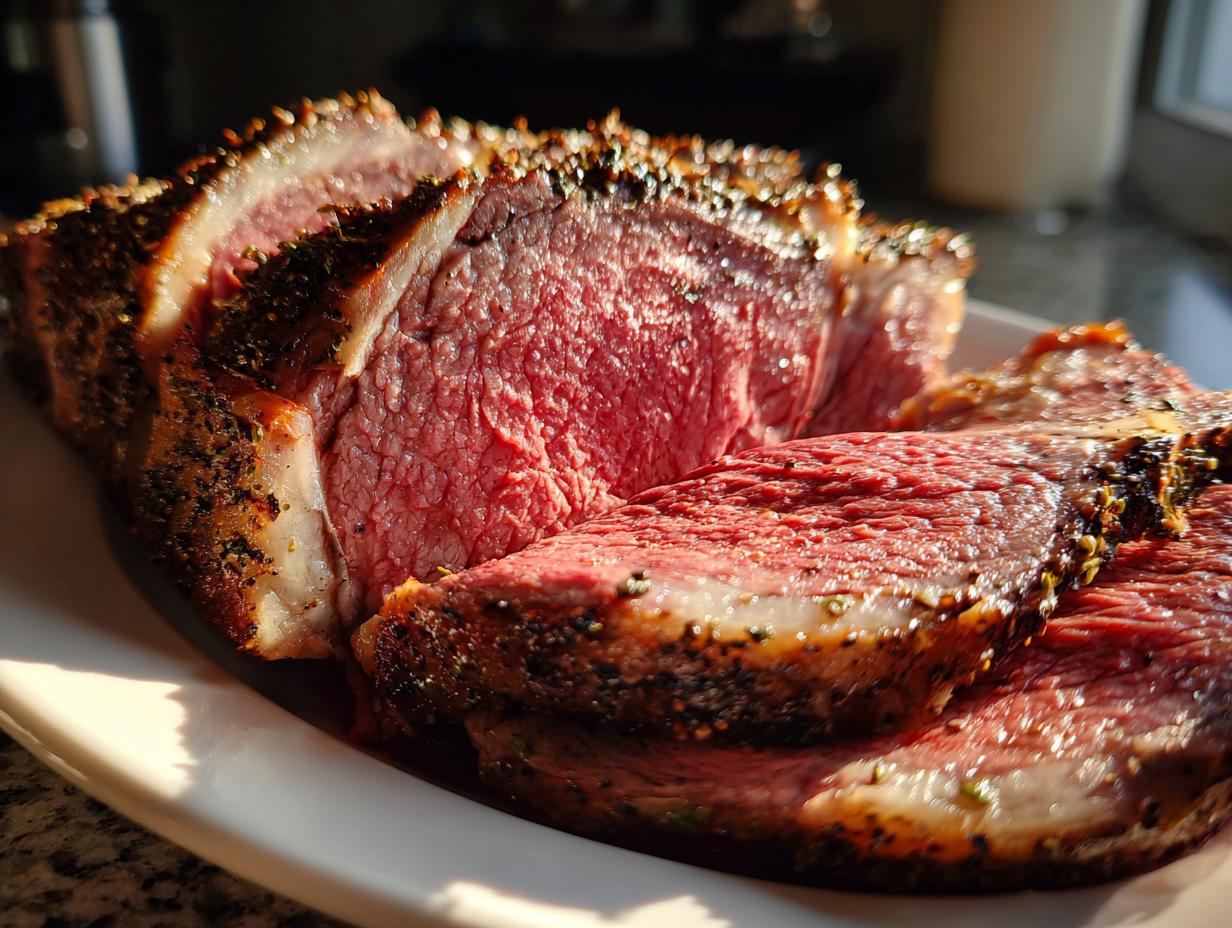
There is nothing quite like seeing a show-stopping prime rib roast sitting on the table for a big gathering. It just screams, “We are celebrating!” But if you’re like me, Claire, sometimes the thought of roasting something so expensive can bring on serious kitchen sweats. We started this whole idea at Bliss Batter because we want to ditch the intimidation factor. That’s why I worked tirelessly to perfect this foolproof recipe for an herb-crusted prime rib roast that delivers incredibly tender, juicy results every single time using a really simple oven method. You absolutely don’t need to be a professional chef to tackle this centerpiece!
- Why This Herb-Crusted prime rib Recipe Delivers Perfection
- Gathering Ingredients for Your prime rib Roast
- Essential Equipment for Cooking prime rib
- Step-by-Step Instructions for the Perfect prime rib
- Tips for Success When Making prime rib
- Ingredient Substitutions for Your prime rib
- Serving Suggestions for Your prime rib Dinner
- Storing Leftover prime rib and Reheating
- Frequently Asked Questions About prime rib
- Next Steps for Your Home Cooking Journey
Why This Herb-Crusted prime rib Recipe Delivers Perfection
The secret to getting that gorgeous, crackly crust while keeping the inside perfectly rosy pink on your prime rib isn’t just luck—it’s all about temperature control. We aren’t faking it here; we’re just using smart oven physics! We start hot to really set that herb crust we worked so hard on, and then we back off so the inside cooks gently.
This simple two-stage method guarantees you won’t end up with a gray band of overcooked meat just beneath the surface. Trust me, this technique makes cooking a massive prime rib feel totally manageable, even for a big holiday crowd.
Key Benefits of Our prime rib Technique
- You get a guaranteed, deeply flavorful crust that locks in all the seasonings.
- The gentle slow-cooking phase ensures incredible tenderness right through to the center.
- It relies on simple oven management, letting the thermometer do the hard work for you in terms of timing.
- It minimizes the stress associated with cooking such a spectacular piece of meat!
If you want to see more ways to guarantee a showstopper crust, peep my favorite crust tips over here: this guide really breaks down how to get that beautiful exterior.
Gathering Ingredients for Your prime rib Roast
Okay, let’s talk about what you’ll need. When you’re cooking something this special, you really need good ingredients! We aren’t keeping secrets here; you can grab everything at your regular grocery store for this delicious prime rib. The success of the crust really depends on the quality of your salt and your fresh herbs. We need a beautiful bone-in roast, the oil, the garlic, and the star spices.
Here’s exactly what you should lay out on the counter before you even think about touching that roast:
- One big (5-7 lb) bone-in prime rib roast
- A good glug of olive oil (that’s our binder!)
- Four cloves of garlic, and I mean minced finely, please!
- Two tablespoons of fresh rosemary that you’ve chopped up
- One tablespoon of fresh thyme leaves, stripped right off the stem
- One whole tablespoon of coarse salt—don’t skimp here!
- One teaspoon of freshly cracked black pepper
- One teaspoon of onion powder
Herb Rub Components Explained
The coarse salt does double duty: it seasons deeply and it helps pull moisture to the surface just a tiny bit so the crust gets great texture. Rosemary and thyme are absolutely non-negotiable here; they are what smell like a fancy steakhouse when they hit that high initial heat. The onion powder just rounds out that beautiful earthy flavor profile we are building!
Essential Equipment for Cooking prime rib
Listen, you can have the best prime rib in the world planned out, but if your kitchen gear isn’t ready, you’re setting yourself up for a headache. Don’t panic, you don’t need a million fancy gadgets, but three things are absolute must-haves for this roast to turn out perfect and avoid being dry.
First, you need a sturdy shallow roasting pan—nothing warped! Second, get a rack to support that big hunk of beef; we need airflow all around it. But seriously, the MVP here is your meat thermometer. You cannot guess with these big cuts. Invest in a reliable digital one; it’s the key to not overcooking your dinner!
Step-by-Step Instructions for the Perfect prime rib
Okay, deep breath! This is actually the easiest part, provided you give the roast enough time to chill out beforehand. The number one mistake people make when cooking a giant cut like this prime rib is pulling it straight from the fridge and shoving it into a hot oven. Don’t do this! I always pull mine out at least two hours—closer to three if it’s really huge—before I plan on seasoning it. Letting it warm up just slightly ensures that big chunk cooks evenly. Once it’s tempered, we move fast! If you want another wonderful big roast to try after mastering this one, check out my thoughts on making pot roast.
Preparing the Herb Crust and Tempering the prime rib
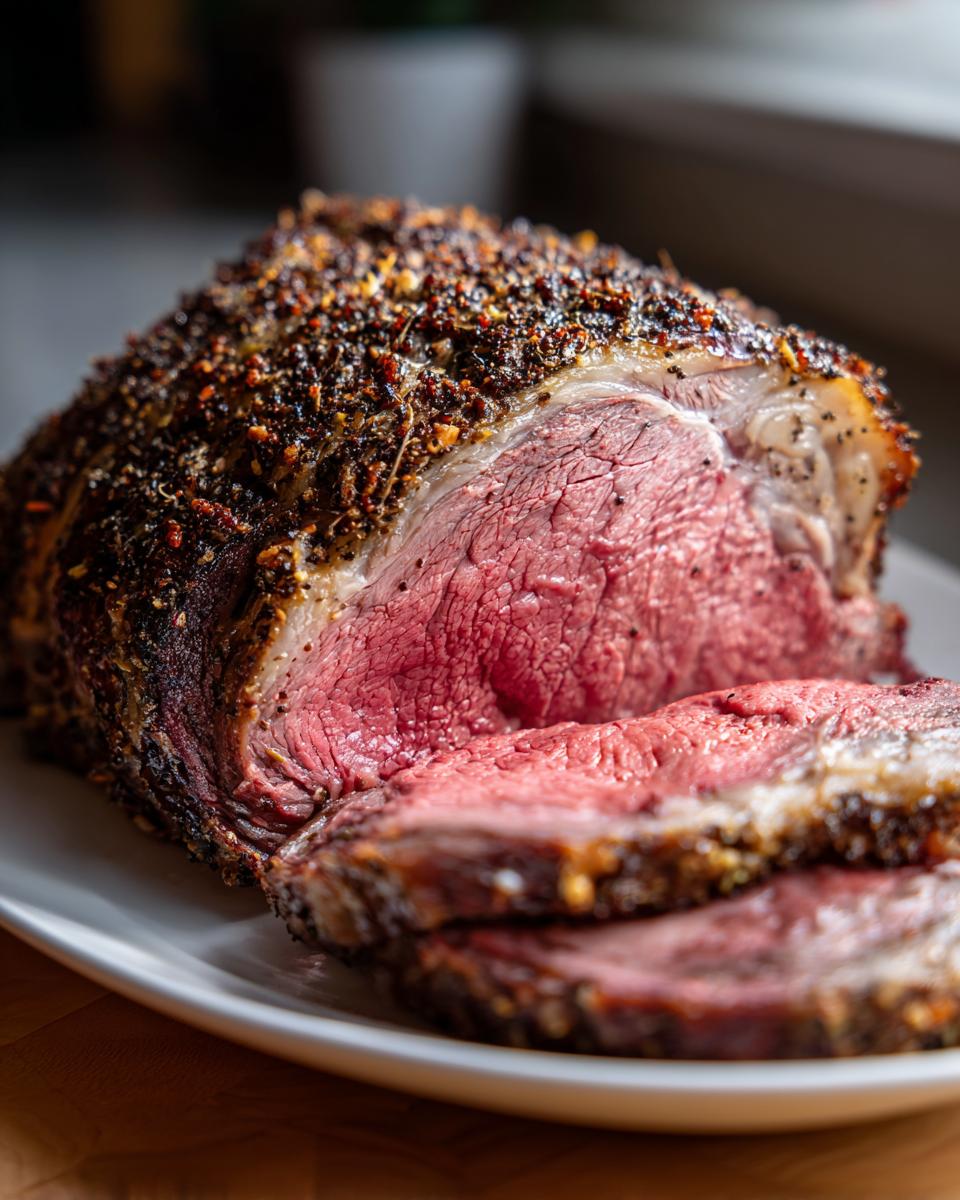
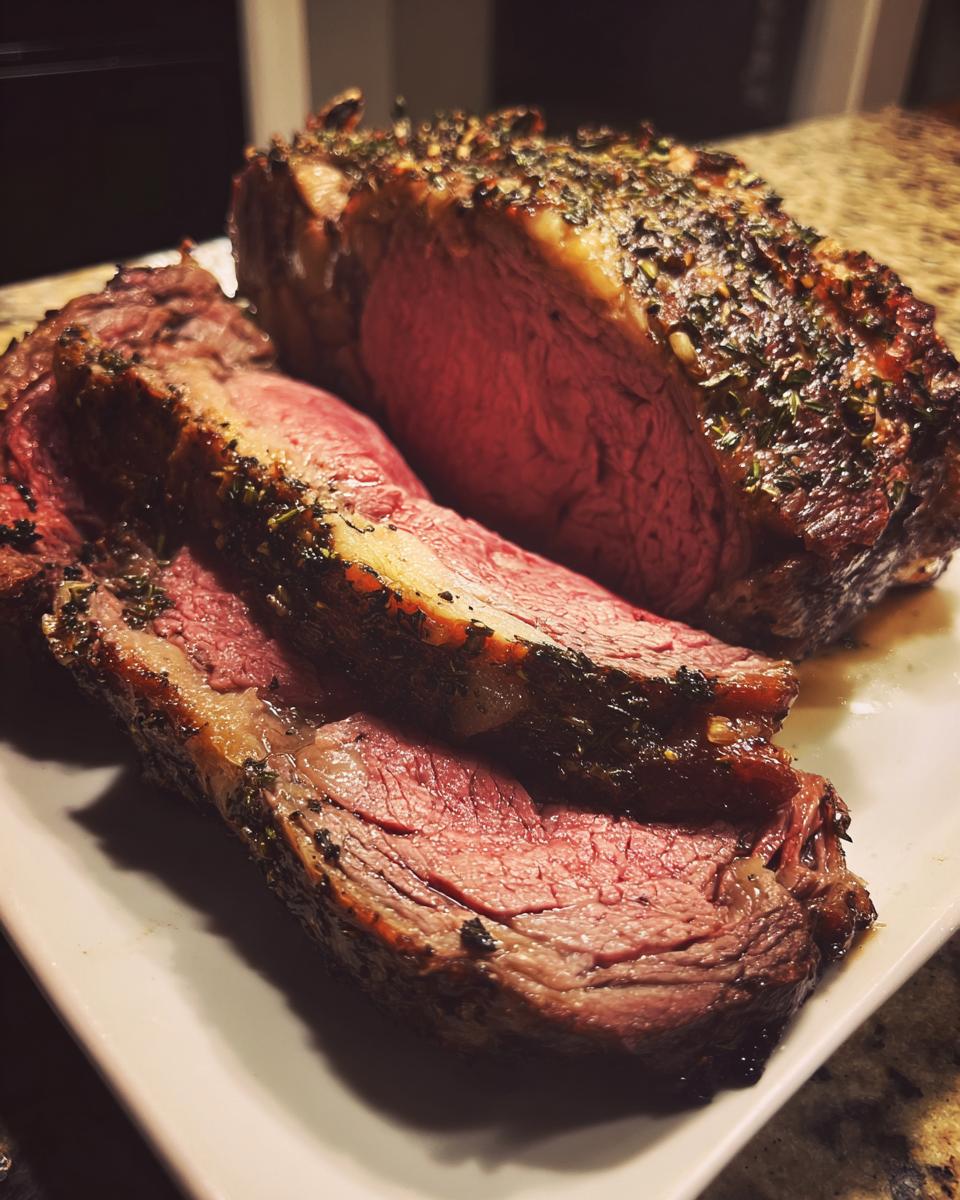
Once tempered, you rub it down thoroughly with olive oil. Think of the oil like your glue. Then, take that herb mixture we made and press it—I mean really *press* it—onto every single surface of the meat. Don’t just sprinkle! You want that fragrant layer to stick tight because that’s what’s going to give us the amazing crust we’ve been aiming for. Get it all over the sides and the bottom, too, if you can reach it without tearing up your hard work.
The Two-Stage Oven Method for prime rib
Time to roast! Get your oven screaming hot to 500°F (260°C). Pop the roast onto the rack in your pan and let it sizzle there for just 15 minutes. This is our quick-sear blast. After those 15 minutes are up, you must resist the urge to peek! Turn the oven temp way down to 325°F (160°C). Do not open the door when you lower the temp; just adjust the dial and let your prime rib cook slowly until your thermometer reads 125°F (52°C) for a beautiful rare result. That temperature drop is the magic trick here!
Resting and Carving Your prime rib Roast
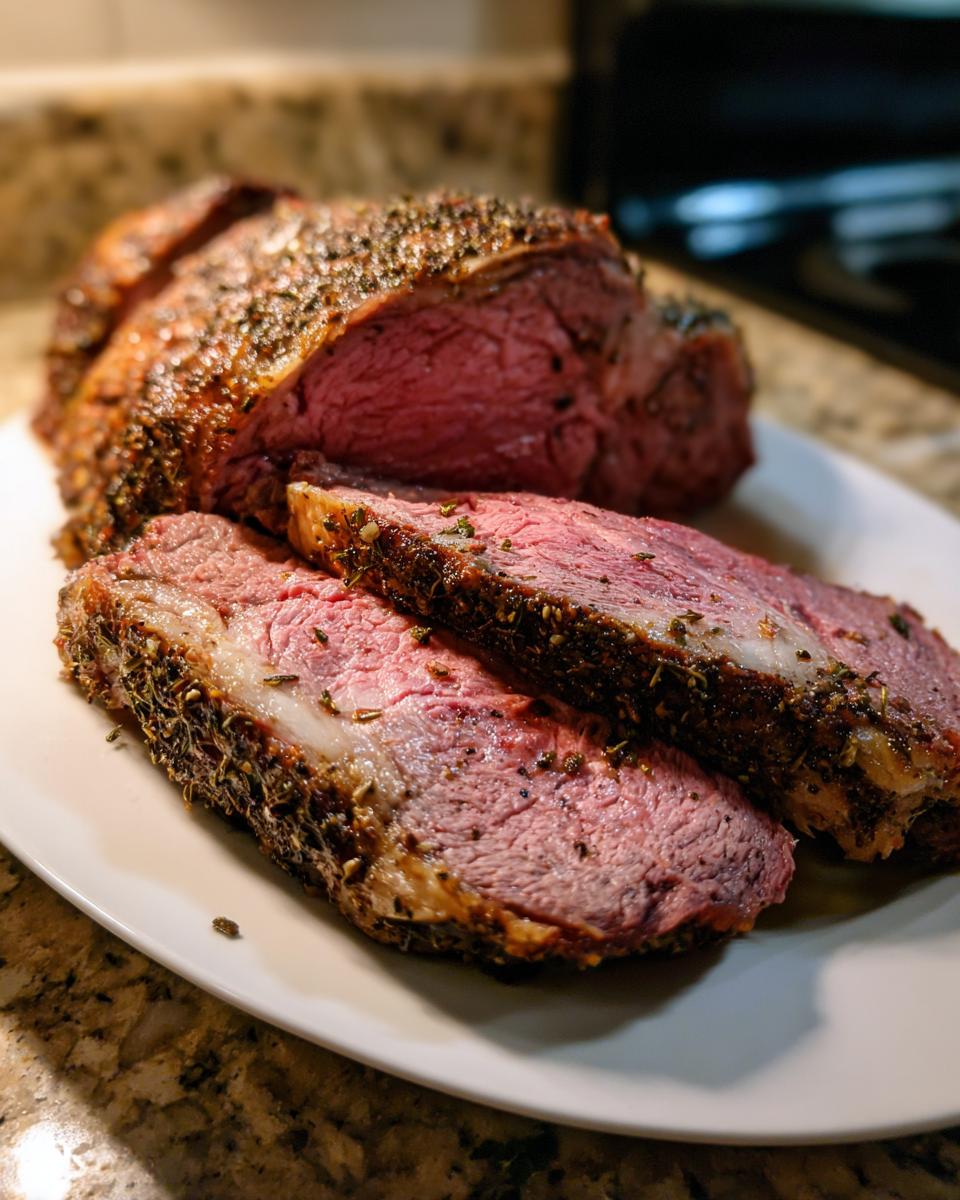
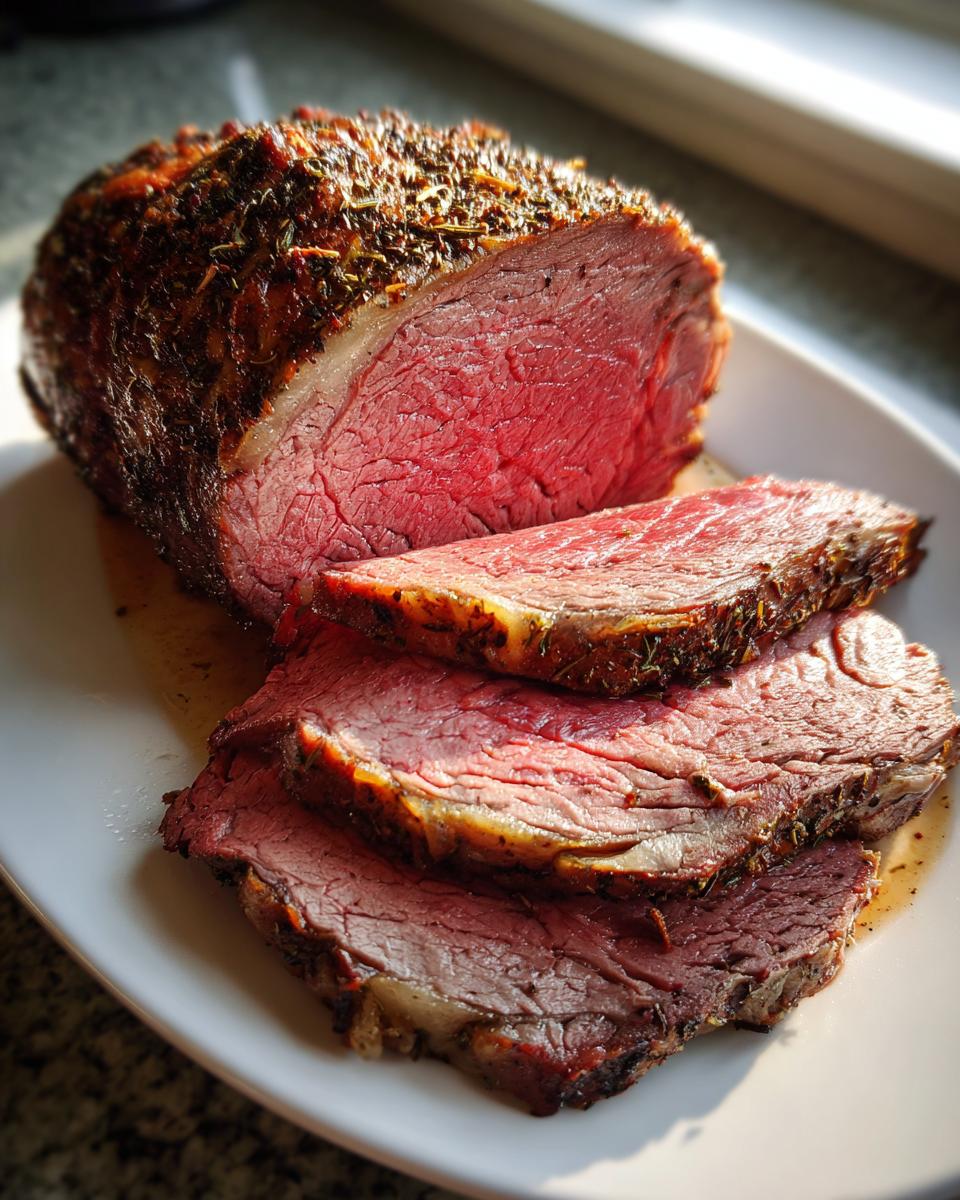
This next step is crucial, non-negotiable, and frankly, the hardest part: resting! Pull that roast out and tent it loosely with foil right away. It needs a minimum of 20 minutes—longer is actually better if you can manage it. If you skip this rest, all those beautiful juices you worked so hard to keep inside will rush out onto your cutting board when you slice it. After resting, carve that gorgeous piece of beef against the grain. Talk about a perfect finish!
Tips for Success When Making prime rib
I know cooking a prime rib feels intimidating, but honestly, once you master the thermometer, you’ve mastered the whole thing! If you are nervous about the high heat blast at the beginning, you can check out what some folks call the reverse sear method. It involves going low and slow first, which is great for an unbelievably tender meat, and then blasting it hot right at the end to get that gorgeous crust going. I have a great article linked here that explains that technique if you want to explore it: sometimes dry-brining first is best.
But for this method, remember to trust your thermometer over the timer! Every oven is different, and every roast is shaped differently. If you followed my advice and let your meat come up to room temperature first, the timing will be much more predictable. If you want to practice cooking big cuts without the pressure of a holiday crowd, try my recipe for braised short ribs—they teach amazing slow-cook techniques!
Ingredient Substitutions for Your prime rib
I get asked all the time if you can swap out ingredients, especially if you’re mid-prep and realize you’re short on fresh rosemary! Look, this is a recipe that shines best with fresh herbs, but we are all about making do in a real kitchen, right? If you only have dried herbs on hand, you absolutely can use them instead of the fresh ones. But listen closely: dried herbs are much more potent than fresh, so you need to use way less.
For the dried versions of rosemary or thyme, cut the amount in half. So, if I called for two tablespoons of fresh rosemary, you’d only want one tablespoon of dried. You want the flavor, not the overpowering dusty taste!
What about the oil? Olive oil works fantastic because it has a nice flavor, but if you don’t have that, use a neutral oil like vegetable or canola oil. You just need something to help that herb rub stick to the beef without adding a flavor that will fight with the thyme. Just avoid anything heavy like coconut oil for this one, okay? We want the fat to be smooth and let those beautiful herbs sing the loudest!
Serving Suggestions for Your prime rib Dinner
So you’ve mastered the cooking, and now you have this absolutely gorgeous prime rib roast sitting there, waiting for its moment! Don’t let yourself down on the sides, please! A perfect roast needs equally perfect companions. I find that sticking to the classics really lets that rich beef flavor shine through, which is what we want when we’ve worked this hard on the main attraction.
You absolutely must have creamy mashed potatoes—mine are famous for being totally foolproof, so check out my recipe here when you’re planning the whole menu. Also, don’t forget some green! Roasted asparagus or green beans tossed with a tiny bit of lemon juice just balance out the richness of the prime rib so wonderfully. It feels like a complete, special meal when you serve it all together!
Storing Leftover prime rib and Reheating
Oh, the glorious aftermath! If you’re lucky enough to have leftovers from your massive prime rib roast, we need to treat them right. You don’t want to reheat those beautiful slices and end up with tough, dry beef the next day, right? That would be a tragedy after all that hard work!
First things first: storage. Once the roast has fully cooled after resting, wrap any leftover slices tightly in plastic wrap, and then maybe slip that package into an airtight container or Ziploc bag. This helps keep air away so it doesn’t dry out in the fridge. It should keep perfectly fine for about three to four days in the refrigerator. If you use my leftover turkey sandwich technique for wrapping, success is almost guaranteed! You can read about that simple trick here: how I keep my leftovers fresh.
When it’s time to reheat, please say no to the microwave for more than maybe 30 seconds! We are aiming for moisture revival, not jerky production. The absolute best way to reheat slices is low and slow in the oven. Set your oven to a super low heat—say, 250°F (120°C).
Place your slices in a shallow baking dish. Here’s the secret weapon: pour just a tiny bit of beef broth or even just water into the bottom of the pan—just enough to come up about a quarter-inch on the side of the meat. Cover the whole dish tightly with foil. This steams the meat gently while it warms up slowly. It usually only takes about 10 to 15 minutes to warm through, depending on how many slices you have. Pull them out immediately when they are warmed through, and they’ll taste almost as good as the first time!
Frequently Asked Questions About prime rib
It’s funny how even when a recipe seems foolproof, we still end up with a stack of questions right before we pull the roast out of the oven! That’s totally normal, especially when dealing with a showstopper meal like this herb-crusted prime rib. I always tell folks that the beauty of this method is that it builds in a lot of forgiveness, but using a good meat thermometer really seals the deal for that perfect result every time. If you’re looking for some other roasted meat inspiration after this, my recipe for roast chicken is a real weeknight lifesaver!
What internal temperature is best for prime rib?
This is the most important question, honestly! For our lovely prime rib, the sweet spot is usually around 125°F (52°C) if you want it perfectly rare, meaning it will come out even pinker after resting. If you prefer medium-rare, you’ll want to pull it out around 130°F (54°C). You absolutely must use a thermometer inserted into the thickest part of the meat, away from the bone, to hit these targets. Don’t guess!
Can I cook a smaller prime rib roast?
Yes, you totally can! This high-low method works for any size roast. After your initial 15 minutes at 500°F, the cooking time at the lower 325°F is usually around 13 to 15 minutes per pound. So if you have a 3-pound roast instead of a 7-pounder, just adjust that lower cook time accordingly. You’ll still want to pull it off the heat slightly *before* your target temperature, because that rest time is key to reaching perfection. For more detailed timing guides on different sizes, I always recommend checking out detailed guides like this one: perfect roast guides.
Is the herb crust supposed to get really dark?
It’s supposed to get beautifully browned and fragrant, yes! That’s what that initial blast of high heat does. As long as you drop the oven temperature quickly, the herbs shouldn’t actually burn; they just toast really nicely. If you notice it looking too dark too fast, you can always tent that section loosely with foil about halfway through the low-temperature cooking phase.
Can I use a bone-out roast instead of bone-in?
You can, but the bone actually acts like an insulator and helps the meat around it cook a little more evenly. If you use a boneless prime rib, you might end up needing to slightly reduce your lower cooking time, so definitely keep that thermometer handy! You’ll also lose some of that incredible underlying flavor the bone imparts, but it’s still delicious!
Next Steps for Your Home Cooking Journey
Wow, now you’ve cooked a masterpiece! I really hope you snap a picture of that gorgeous herb-crusted prime rib and tag me! It makes my entire week to see your successes. If serving a massive roast every week isn’t quite feasible, don’t forget I have plenty of other recipes that are perfect for calmer nights. Sometimes, just using one of the best meal delivery services can make those weekdays so much smoother!
PrintFoolproof Herb-Crusted Prime Rib Roast
Make a tender, juicy prime rib roast with a flavorful herb crust using this simple oven method, perfect for impressing guests at holiday dinners.
- Prep Time: 20 min
- Cook Time: 2 hr 30 min
- Total Time: 2 hr 50 min
- Yield: 6-8 servings 1x
- Category: Dinner
- Method: Roasting
- Cuisine: American
- Diet: Low Calorie
Ingredients
- 1 (5-7 lb) bone-in prime rib roast
- 3 tablespoons olive oil
- 4 cloves garlic, minced
- 2 tablespoons fresh rosemary, chopped
- 1 tablespoon fresh thyme, chopped
- 1 tablespoon coarse salt
- 1 teaspoon black pepper
- 1 teaspoon onion powder
Instructions
- Remove the prime rib roast from the refrigerator 2-3 hours before cooking to allow it to come closer to room temperature.
- Preheat your oven to 500°F (260°C).
- In a small bowl, combine the minced garlic, rosemary, thyme, salt, pepper, and onion powder to make the herb rub.
- Rub the entire surface of the prime rib roast with olive oil.
- Press the herb mixture firmly onto all sides of the roast.
- Place the roast, fat side up, on a rack in a shallow roasting pan.
- Roast at 500°F (260°C) for 15 minutes.
- Reduce the oven temperature to 325°F (160°C). Do not open the oven door.
- Continue roasting until the internal temperature reaches 125°F (52°C) for rare, or 130°F (54°C) for medium-rare. Use a meat thermometer for accuracy. This usually takes about 13-15 minutes per pound at this lower temperature.
- Remove the roast from the oven when it reaches the desired temperature.
- Tent the roast loosely with foil and let it rest for at least 20 minutes before carving. The internal temperature will rise during resting.
- Slice against the grain and serve. This recipe works well when planning your meal around a main course like this, similar to using meal planning services.
Notes
- For a crispier crust, you can use the reverse sear method: cook low and slow first, then finish with a high-heat sear.
- Use a reliable meat thermometer to prevent overcooking; this is key for juicy results.
- If you are looking for alternatives to cooking large roasts, consider looking into best meal delivery services for simpler weeknight options.
Nutrition
- Serving Size: 6 oz cooked
- Calories: 450
- Sugar: 0
- Sodium: 450
- Fat: 30
- Saturated Fat: 12
- Unsaturated Fat: 18
- Trans Fat: 0
- Carbohydrates: 1
- Fiber: 0
- Protein: 40
- Cholesterol: 140